Bisleri water cancer chemicals: bromate and PAHs explained
Most of us don’t think twice before twisting open a sealed bottle of water. Whether we pick one up at a local grocery store, a crowded railway station, or a roadside dhaba, we take it for granted that the water inside is clean and safe. In India, Bisleri is practically synonymous with packaged water—millions of people rely on it every single day.
Lately, though, viral headlines about microplastics, chemical contaminants, and potential carcinogens in bottled water have sparked genuine anxiety. People are suddenly asking: Does Bisleri actually contain cancer-causing chemicals? Is bottled water really as safe as we think? Could the plastic itself be leaching something harmful?
These are fair questions, and they deserve straight, grounded answers rather than clickbait panic. Let’s break down what actually happened in the recent Bisleri controversy, what these chemicals are, how real the health risks are, and how you can keep your drinking water safe.
1. What Happened in the Bisleri Drinking Water Controversy?
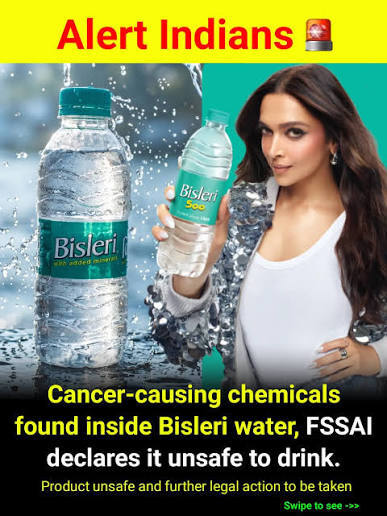
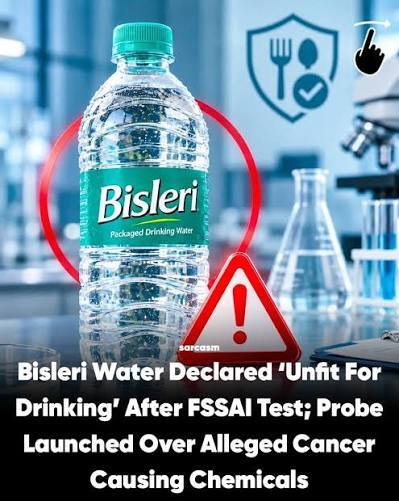
In November 2026, reports surfaced that the Food Safety and Standards Authority of India (FSSAI) had sanctioned prosecution against Bisleri International Pvt. Ltd. after routine laboratory testing flagged a sample of their packaged water as unsafe.
According to regulatory reports, the initial lab test detected bromate above the permitted safety limit. When the company appealed, a referral laboratory also declared the sample unsafe, this time flagging polynuclear aromatic hydrocarbons (PAHs).
Naturally, news like this triggers alarm bells around factory quality control and long-term health risks. However, it is important to keep some perspective: a regulatory flag on a specific tested sample does not mean every single bottle of Bisleri sitting on store shelves across India is contaminated. Bisleri has publicly disputed aspects of the findings, pointing to its own independent lab tests that cleared the water. While the regulatory action is serious and worth watching, there is a big difference between an isolated batch failure and a nationwide hazard across every bottle a brand sells.
2. What Are the Chemicals Flagged in the Report?
The investigation centered on two very different substances: bromate and polynuclear aromatic hydrocarbons (PAHs). They enter water through completely different pathways and carry different risk profiles depending on how much you are exposed to and for how long.
What is bromate? Bromate isn’t usually dumped into water; it forms accidentally during purification. Many bottling plants use ozone gas (ozonation) to kill bacteria and disinfect water. When that ozone reacts with naturally occurring bromide in the source water, bromate is created as a chemical by-product.
In the Bisleri case, the initial lab report reportedly measured bromate at 12 micrograms per liter—just above India’s legal limit of 10 micrograms per liter. Bisleri countered that its own testing showed levels well within the safe threshold, which is why regulators have to scrutinize testing methods carefully.
Why does bromate matter? Toxicology studies show that long-term, heavy exposure to bromate can damage the kidneys, cause cellular stress, and potentially increase cancer risk. That is precisely why food safety agencies set strict limits on it. Still, those findings come from sustained, high-level exposure—drinking a single bottle with slightly elevated bromate isn’t going to give you cancer or kidney failure.
3. What Are PAHs (Polycyclic Aromatic Hydrocarbons)?
PAHs are a large family of chemicals formed when organic materials like coal, wood, oil, or garbage burn incompletely. They are common environmental pollutants found in vehicle exhaust, industrial smoke, and contaminated runoff.
Because “PAHs” refers to dozens of different compounds, they aren’t all equally dangerous. Some are known carcinogens, while others are far less harmful. Prolonged exposure to specific high-risk PAHs can cause DNA damage and increase cancer risk over time.
Finding PAHs in a drinking water sample definitely warrants an investigation into how environmental pollution got into the supply. That said, public reports on the Bisleri case haven’t specified which exact PAH compounds were found or at what concentrations—details that toxicologists need before they can calculate any real-world risk to consumers.
4. Does Bisleri Water Contain Cancer-Causing Chemicals?
To put it plainly: one flagged sample does not mean all Bisleri water causes cancer.
Bisleri operates dozens of bottling plants across the country, drawing from different local water sources and producing millions of batches. A problem detected in one specific lot cannot automatically be applied to every bottle on the market.
When reading news about food safety, it helps to separate four very different concepts:
-
Detection: A sensitive lab instrument spots a trace amount of a chemical.
-
Exceeding a limit: The chemical crosses a strict regulatory threshold set with a wide safety buffer.
-
Hazard: The chemical can cause harm under certain heavy-exposure conditions.
-
Actual risk: The real-world likelihood that drinking the water will actually make you sick.
5. Can Drinking Contaminated Water Cause Cancer?
Yes, over many years, consistently drinking water contaminated with certain chemicals—such as arsenic, industrial solvents, or specific disinfection by-products—can raise your risk of developing cancer.
However, cancer risk isn’t an on/off switch. It depends on the specific chemical, its concentration, how often you drink it, how many years the exposure lasts, and your overall health and lifestyle. Regulators set drinking water limits based on a lifetime of daily consumption, not an occasional bottle bought while traveling. There is zero evidence linking the disputed Bisleri sample to any cancer cases among consumers.
6. How Do Chemicals End Up in Packaged Water in the First Place?
Bottled water isn’t just tap water poured straight into plastic. Most commercial plants put source water through a multi-step treatment line:
-
Sand and activated carbon filtration
-
Reverse osmosis (RO)
-
UV disinfection
-
Ozonation
-
Mineral balancing
While these steps are designed to strip out impurities, the process requires constant calibration. If the source water has high natural bromide and the ozone dose isn’t dialed in properly, bromate forms. Similarly, if industrial runoff seeps into groundwater or storage equipment isn’t properly sealed, environmental pollutants like PAHs can sneak through. That is why continuous batch testing is non-negotiable.
7. Are Other Bottled Water Brands in India Completely Safe?
In India, every packaged drinking water manufacturer has to meet strict BIS (Bureau of Indian Standards) and FSSAI norms. Even so, you shouldn’t assume every sealed bottle is automatically flawless. Water quality comes down to source purity, plant hygiene, equipment maintenance, and even how a shopkeeper stores the crates.
Crystal-clear water doesn’t guarantee chemical safety—you can’t see or taste trace contaminants like bromate or PAHs. Your best defense is sticking to reputable brands, buying from busy shops with high stock turnover, and checking the packaging before you drink.
8. Quick Checks Before You Buy a Bottle of Water
You don’t need a home chemistry kit to make smarter choices at the store. Just make a habit of checking a few basics:
-
Inspect the print: Look for a clear manufacturing date, expiry date, and batch/lot number. If the ink is smudged or missing, skip it.
-
Test the seal: Twist the cap slightly before buying to make sure the tamper-evident ring is completely intact.
-
Watch out for sun-baked crates: Never buy bottles stacked outside in direct sunlight. Prolonged heat can degrade plastic packaging and alter water quality.
-
Pay attention to recalls: If FSSAI issues an advisory for a specific batch number, check your bottle against it rather than throwing out unrelated stock.
9. What If You Already Drank from a Flagged Batch?
First, take a deep breath. You are not going to develop cancer from drinking a bottle or two of water, even if it came from a batch that failed a lab test.
If you realize you have water from an officially recalled lot:
-
Stop drinking it and pour out the rest (or keep the bottle if you plan to report it to local food safety authorities).
-
Don’t fall down a rabbit hole of self-diagnosis. Trace chemical exposure rarely causes immediate symptoms.
-
Talk to a doctor only if you feel unwell or have specific health concerns that warrant personalized advice.
10. Practical Ways to Keep Your Daily Water Safe
Whether you rely on bottled water, municipal supply, or borewell water, a few simple habits go a long way toward cutting down your exposure to contaminants:
-
Service your home purifier on time: An RO or activated carbon filter only works if you replace the cartridges on schedule. Old filters can actually release trapped contaminants back into your water.
-
Scrub your storage containers: Wash reusable water bottles, jugs, and overhead tanks regularly to prevent biofilm and residue buildup.
-
Keep water cool and shaded: Store drinking water away from heat, direct sunlight, and household chemicals like cleaners or pesticides.
-
Test private water sources: If your home relies on a well or borewell—especially near farms, factories, or heavy traffic—get a lab test done once a year to check for heavy metals, nitrates, and chemical runoff.
11. What This Means for the Bottled Water Industry
If anything good comes out of the Bisleri controversy, it should be a push for better transparency. People pay for bottled water because they want peace of mind. Brand loyalty alone isn’t enough anymore—consumers want proof that plants are testing rigorously for both microbes and chemical by-products.
At the same time, regulators and the media share a responsibility to communicate clearly. Publishing exact batch numbers, confirmed chemical levels, and practical guidance helps people protect themselves without triggering unnecessary panic.
Frequently Asked Questions (FAQ)
Is Bisleri water unsafe to drink right now? No. The FSSAI action centers on specific tested samples that Bisleri has contested. It does not mean every bottle of Bisleri on the market is unsafe. Unless regulators issue a recall for a specific batch you own, there is no broad ban or advisory against the brand.
Which cancer-causing chemicals were reported in the Bisleri case? Regulatory lab reports flagged elevated levels of bromate (a disinfection by-product) and polynuclear aromatic hydrocarbons (PAHs) (environmental pollutants). Certain compounds in both categories are linked to cancer risk after prolonged, high-level exposure.
Does boiling water remove bromate or PAHs? No. Boiling kills bacteria and viruses, but it will not remove chemical contaminants like bromate or PAHs—in fact, evaporating water can slightly concentrate certain chemicals. Removing chemical pollutants requires specialized filtration like activated carbon or reverse osmosis.
Is bottled water safer than tap water? Not always. Properly treated and filtered tap water at home is often just as safe—and sometimes fresher—than bottled water that has been sitting in a warm warehouse for months. Safety depends entirely on source quality, filtration, and clean storage.
Food safety controversies naturally make us uneasy, especially when they involve something as basic as the water we drink every day. While the Bisleri lab findings underscore why strict quality control and transparent testing matter, they aren’t a reason to panic. Stay informed, check your bottle labels, maintain your home filters, and let solid facts—not scary headlines—guide how you stay hydrated.