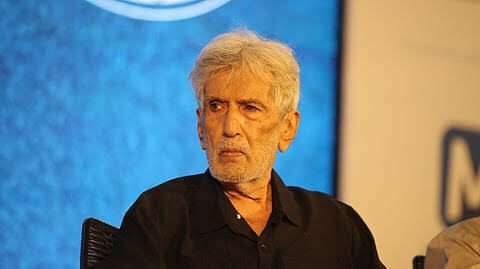
34th Ezhuthachan award: Methil Radhakrishnan wins kerala’s highest literary honour – his life and famous literary works
When the Kerala government announced on Kerala Piravi Day that Methil Radhakrishnan had won the 34th Ezhuthachan Puraskaram, the collective reaction across literary circles was a mix of quiet satisfaction and mild surprise.
Satisfaction, because few writers have reshaped the syntax of modern Malayalam thought as radically as he has. Surprise, because Methil has spent the better part of five decades operating deliberately on the periphery of the literary establishment—indifferent to fame, skeptical of institutions, and notoriously uncompromising.
Instituted in 1993 and carrying a cash prize of ₹5 lakh alongside a citation and plaque, the Ezhuthachan Award is the state’s highest literary tribute. Yet honoring Methil feels less like conferring a routine state garland and more like an overdue institutional reckoning with a writer who redefined what Malayalam prose could dare to do.
Key Details at a Glance
| Detail | Fact |
| Honor | 34th Ezhuthachan Puraskaram (2026) |
| Recipient | Methil Radhakrishnan |
| Field | Malayalam Literature (Lifetime Contribution) |
| Date Announced | November 1, 2026 (Kerala Piravi) |
| Purse | ₹5,00,000, citation, and plaque |
| Preceding Recipient | K. G. Sankara Pillai (2025) |
| Jury Chair | K. G. Sankara Pillai |
| Jury Members | Kalpetta Narayanan, K. Satchidanandan, Sarah Joseph, M. P. Surendran |
A Writer Shaped Outside the Campus Walls
Born on August 24, 1944, in Puthiyankam near Alathur, Palakkad, Methil Radhakrishnan followed a trajectory unlike nearly all of his contemporaries.
While the giants of post-independence Malayalam fiction were often journalists, university professors, or active cultural activists, Methil built a career in corporate computing and technical documentation. He headed computer operations for a Norwegian shipping line and later worked as a senior technical writer for Nest Software.
That background in formal logic, systems design, and precise technical jargon bled directly into his art. He never treated science, cybernetics, or biology as alien disciplines to be kept at arm’s length from creative literature; instead, he treated them as natural extensions of human consciousness. Where others wrote social realism, Methil wrote with an entomologist’s lens and an engineer’s detachment.
Shattering the Linear Narrative
To open a Methil book is to abandon the comforting guardrails of traditional plot, character arcs, and moral closure. He does not tell stories to reassure; he constructs linguistic puzzles.
When his debut novel Sooryavamsham appeared in 1970, it signaled a clean break from conventional Malayalam modernism. Works like Bra (1974) and Chuvanna Vidushakarude Anchampathi (1974) went further, stripping fiction down to sharp intellectual sparks, surreal associations, and dry irony.
His titles alone read like playful provocations:
-
Engane Oru Pazhutharaye Kollam (How to Kill a Centipede)
-
Nayakanmar Shavapettikalil (Heroes in Coffins)
-
Melinjavarude Manashastram (The Psychology of Thin People)
-
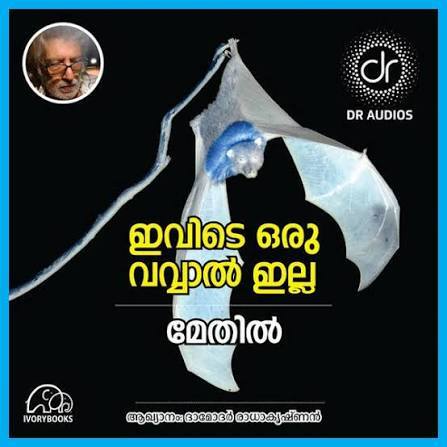
Ivide Oru Vavval Illa (There Is No Bat Here)
-
Dylan Thomasinte Panthu (Dylan Thomas’s Ball)

Across his non-fiction collections, including Romam (Hair) and Daivam, Manushyan, Yanthram (God, Man, Machine), he probed the borders between organic life, human spirituality, and technology long before artificial intelligence became a fashionable conversation topic.
An Uncompromising Distance from Institutions
Methil’s relationship with official recognition has always been prickly. When the Kerala Sahitya Akademi chose him for an overall contribution award, he famously turned it down, making no secret of his disdain for state-run literary academies.
That rejection only burnished his reputation as a writer’s writer—someone who wrote entirely on his own terms, unbothered by commercial appeal or committee approval. That the Ezhuthachan jury—chaired by poet K. G. Sankara Pillai alongside Kalpetta Narayanan, K. Satchidanandan, and Sarah Joseph—chose him unanimously speaks to the sheer undeniable weight of his body of work.
Why His Legacy Matters Now
Methil Radhakrishnan never wrote for mass consensus. His prose demands that the reader slow down, look closely at the architecture of a sentence, and reconsider everyday reality—whether through the mechanics of an insect’s antennae, the rhythm of cinema (Hitchcockinte Idapedal), or the quiet absurdity of existence.
Recognizing him with the Ezhuthachan Award proves that literature does not belong solely to the grand narratives of social history; it belongs equally to the innovators, the oddballs, and the lonely visionaries who spent a lifetime stretching the language to its outer limits.