Preserving the soul of kerala: a deep dive into the kerala folklore academy
When we think of Kerala, we often picture serene backwaters, lush green hills, and vibrant festivals. But beneath this postcard beauty lies a much deeper, older heartbeat: our living folklore. From the fierce, drum-fueled frenzy of a North Malabar Theyyam to the rhythmic masks of Padayani in Central Travancore, our folk traditions are not staged spectacles created for tourists. They are living archives of our community’s history, caste struggles, agricultural rhythms, and spiritual beliefs.
Yet, survival isn’t easy for these heritage forms. In an era dominated by screens, shifting lifestyles, and the decline of traditional patronage, many ancient practices are struggling to find relevance and sustenance. A Theyyam performer cannot feed a family solely on seasonal blessings; a folk balladeer’s songs risk dying out if no one in the next generation is listening.
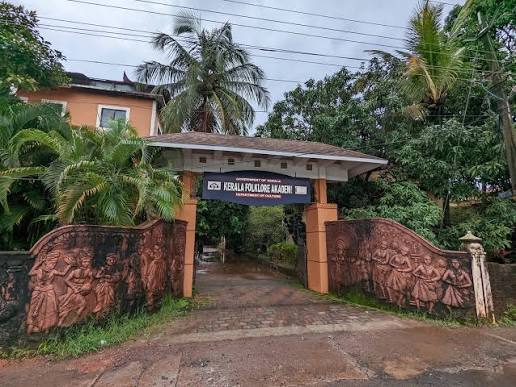
That is where the Kerala Folklore Academy (കേരള ഫോക്ലോർ അക്കാദമി) steps in—not as an academic relic, but as an active sanctuary for the art forms that define the soul of the state.
1. Roots in North Malabar: The History and Setting
Established by the Government of Kerala on June 28, 1995, and officially operational from January 20, 1996, the Academy was envisioned as an autonomous cultural body operating under the Department of Cultural Affairs.
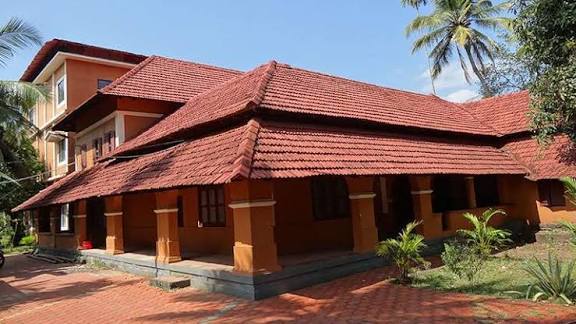
Its headquarters could not have been placed in a more fitting location: Kizhakke Kovilakam in Chirakkal, Kannur.
Housed in a storied heritage complex belonging to the former Chirakkal royal family, the campus sits right beside the expansive Chirakkal Lake. North Malabar is the cradle of Kerala’s ritualistic performance heritage—a land steeped in Theyyam, Thottam Pattu, Vadakkan Pattukal, and Poorakkali. Placing the Academy here grounded it directly within a thriving, grass-roots folk ecosystem rather than insulating it in an administrative capital.
2. What the Academy Actually Does
The mandate goes far beyond hosting occasional stage shows. The Academy works across several interlocking fronts to ensure folk traditions survive both culturally and economically:
-
Promoting Traditional Performing Arts: Bringing obscure ritual forms, temple arts, and community dances to public stages across the state and beyond.
-
Artist Welfare and Direct Aid: Traditional performers often face precarious economic realities. The Academy runs welfare assistance programs, offers medical emergency aid, and supports aging masters who have dedicated their lives to art forms that rarely paid a pension.
-
Training and Apprenticeships: Setting up rural workshops, summer camps, and school-level outreach so indigenous dance, percussive rhythms, and folk songs are taught directly to younger generations by traditional gurus.
-
Field Research & Scientific Archiving: Recording oral songs (pattukal), documenting ritual techniques, filming vanishing ceremonies, and preserving dialects that exist only in performance memory.
-
Publications & Specialist Library: Running an extensive folklore library at Chirakkal and publishing scholarly studies, documentation monographs, and collections of oral literature.
3. Honours and Recognition: Giving Masters Their Due
For decades, traditional folk performers worked without formal mainstream recognition. While classical dancers received state awards, a master who spent forty years performing ritual theatre often remained unrecognized outside his local village.
The Academy transformed this landscape by introducing institutional awards and financial fellowships:
-
Folklore Academy Awards & Fellowships: Annual honors given to veteran practitioners and scholars across distinct performance categories.
-
Gurupooja Puraskaram: Dedicated to honoring senior masters and gurus who have spent a lifetime teaching traditional forms.
-
P.K. Kalan Puraskaram: Named in honor of the revered folk artist, activist, and former chairman of the Academy, this prestigious award honors individuals with lifetime contributions to folklore preservation.
-
Prasasthi Pathram: Certificates of merit and encouragement awarded to emerging young talents.
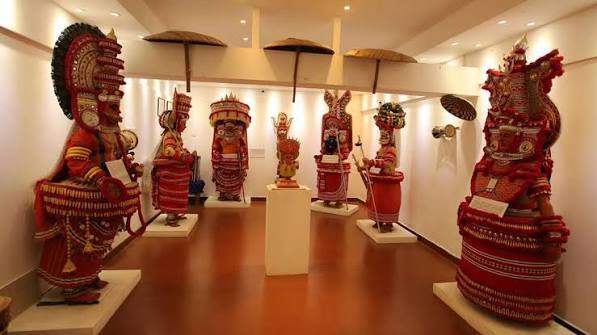
4. Inside the Chirakkal Folklore Museum
If you visit the Academy’s headquarters at Chirakkal, the standout highlight is its Folklore Museum.
Housed inside the wooden corridors and sloping tiled roofs of the historic palace, the museum feels far more personal than a standard glass-case gallery:
-
Theyyam Effigies: Life-sized, vividly decorated figures representing prominent Theyyam forms like Muthappan, Gulikan, and Rakthachamundi, showing off the intricate headgear (mudi), crafted bark ornaments, and traditional body paint designs.
-
Ritual Masks & Kolams: Elaborate, natural-dye masks used in Padayani and Mudiyettu.
-
Indigenous Musical Instruments: An extensive collection of traditional drums, cymbals, pipes, and string instruments—including the chenda, thudi, kuzhal, and rare tribal instruments seldom seen in urban concerts.
-
Agrarian Heritage: Traditional farming implements, wooden storage boxes, household tools, and weapons that trace the daily material life of agrarian Kerala over past centuries.
5. A Living Tapestry of Art Forms
The Academy actively champions the entire spectrum of Kerala’s regional and community diversity:
| Art Form | Core Tradition & Region | Key Elements |
| Theyyam | North Malabar (Kannur, Kasaragod) | Transformational ritual dance, sacred possession, elaborate facial painting, massive headgear. |
| Padayani | Central Travancore (Pathanamthitta) | Masked ritual performance dedicated to Bhadrakali, using painted arecanut-sheath masks (kolams). |
| Mudiyettu | Central Kerala (Ernakulam, Thrissur) | UNESCO-recognized ritual theatre depicting the battle between Goddess Kali and the demon Darika. |
| Oppana | Malabar Muslim Community | Celebratory wedding group dance with rhythmic hand-clapping and Mappila songs. |
| Chavittunatakam | Coastal Christian Communities | High-energy musical drama marked by heavy foot-stamping and ornate European-style costumes. |
| Poorakkali & Marathukali | North Malabar | Synchronized group dance with martial elements, combined with intellectual and philosophical debates. |
| Margamkali | Saint Thomas Christian Community | Traditional round-dance recounting the life and mission of St. Thomas in Kerala. |
| Tribal Traditions | Wayanad, Attappadi, Idukki | Earth-rooted dance rituals and indigenous songs linked directly to forest ecosystems and harvests. |
6. Real Challenges on the Ground
Despite institutional backing, safeguarding living traditions is an uphill task:
-
Economic Viability: A young person today cannot easily commit years to an unpaid apprenticeship when modern jobs offer financial security. Without regular performance stipends, traditions dwindle.
-
Context Loss: When an art form is pulled out of its sacred grove or village harvest ground and placed on a 15-minute festival stage, it risks losing its ritual depth and becoming flat choreography.
-
Loss of Living Memory: Much of our folklore survives purely in oral form. When a veteran artist passes away without an apprentice, entire cycles of songs, drum patterns, and local lore disappear with them.
Initiatives like the Academy’s Rural Art Hubs—which build decentralized learning centers and support local troupes and Kalari teams—are crucial steps toward keeping these arts rooted in their native soil.
7. Plan Your Visit
For students, researchers, or anyone traveling through Kannur, a stop at the Kerala Folklore Academy is well worth the afternoon.
-
Address: Kerala Folklore Academy, Kizhakke Kovilakam, Chirakkal P.O., Kannur, Kerala – 670011
-
Timings: Generally open from 10:00 AM to 4:30 PM on government working days (confirm before visiting).
-
Getting There: Just about 6 km north of Kannur Railway Station. Frequent local buses and autos connect Kannur town to Chirakkal.
-
Nearby Landmark: Situated right by the scenic Chirakkal Chira (one of the largest temple ponds in Kerala).
-
Official Website: keralafolklore.org
-
Contact: +91 497 2778090 | keralafolkloreacademy@gmail.com
Frequently Asked Questions
What is the Kerala Folklore Academy?
It is an autonomous institution under the Cultural Affairs Department of the Government of Kerala, dedicated to documenting, promoting, and protecting the state’s traditional folk and ritual art forms.
Where is it based?
At Kizhakke Kovilakam in Chirakkal, Kannur district, North Kerala.
Can public visitors and tourists visit the museum?
Yes. The Chirakkal complex houses a public folklore museum featuring Theyyam models, costumes, percussion instruments, and historical artifacts.
How does the Academy help traditional folk performers?
Through annual awards, research fellowships, medical and welfare funds, training stipends, and organizing state-level cultural festivals that give artists regular paid platforms.