Kerala kalamandalam – a living centre of kerala’s traditional performing arts
If you take an early morning walk along the banks of the Bharathapuzha in Cheruthuruthy, the mist rising off the river is accompanied by a steady, hypnotic soundscape: the sharp strike of the thalam (cymbals), the rolling thunder of the maddalam, and the rhythmic stamping of bare feet on mud-plastered floors.
This is Kerala Kalamandalam.
In an era when traditional performing arts across the world struggle to survive outside of archival recordings and token festival slots, Kalamandalam stands as a working, breathing sanctuary. It isn’t just a school; it is the reason forms like Kathakali, Koodiyattam, and Mohiniyattam are celebrated on global stages today instead of gathering dust in museum cabinets.
1. How Kalamandalam Saved Kathakali
By the late 1920s, Kerala’s classical theatre traditions were in acute peril. For centuries, these art forms had relied on the patronage of feudal landlords and royal courts. As that socio-political structure fractured, performers found themselves without livelihoods, formal training grounds collapsed, and the rigorous techniques passed down through generations began slipping away.
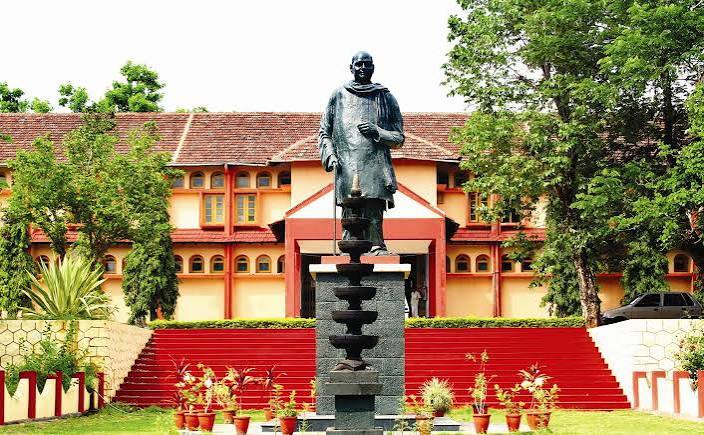
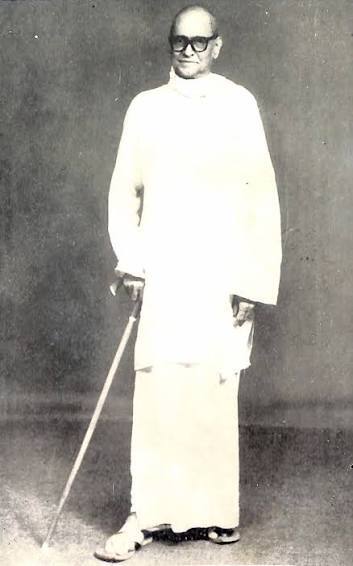
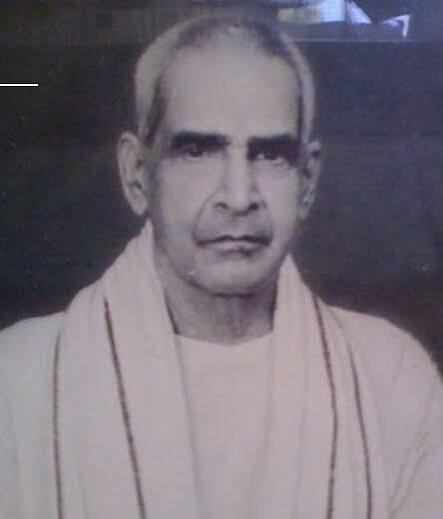
Enter Mahakavi Vallathol Narayana Menon, one of Malayalam literature’s modern triumvirate of poets. Vallathol realized that without an institutional home, Kathakali would become extinct within a generation.
Teaming up with his friend and dedicated patron Manakkulam Mukunda Raja, Vallathol founded Kerala Kalamandalam in 1930.
The journey was anything but smooth. Vallathol famously raised funds through public lotteries, door-to-door appeals, and benefit shows. After briefly operating out of Kunnamkulam and Ambalapuram, the institution shifted in 1936 to its permanent, sprawling campus at Cheruthuruthy, along the riverbank of the Nila.
Key Milestones in the Journey
-
1930: Founded by Vallathol Narayana Menon and Manakkulam Mukunda Raja.
-
1936: Established its permanent home on the banks of the Bharathapuzha in Cheruthuruthy.
-
1962: Designated as the State Akademi of Arts.
-
1990: Integrated formal school education alongside classical training so students wouldn’t fall behind academically.
-
2006–2007: Conferred the status of Deemed-to-be University for Art and Culture by the UGC.
-
2024: Formally dismantled traditional gender barriers across disciplines, opening courses like Kathakali Vesham (acting) and Mohiniyattam to all genders.
2. The Disciplines: Living Traditions of the Stage
Kalamandalam started with a singular focus on Kathakali, but over nine decades it evolved into a comprehensive university of Indian performing arts.
The Major Forms Taught Here
-
Kathakali: The legendary dance-drama known for its monumental headgear (kireedam), vivid facial make-up (chutty), and an exhaustive vocabulary of eye movements (netrabhinaya) and hand gestures (mudras).
-
Mohiniyattam: The “dance of the enchantress,” defined by its flowing, circular swaying movements (andolika), white-and-gold kasavu attire, and subtle, emotive storytelling.
-
Koodiyattam & Nangiarkoothu: The world’s oldest surviving Sanskrit theatre tradition, recognized by UNESCO in 2001 as a Masterpiece of the Oral and Intangible Heritage of Humanity. Its female solo counterpart, Nangiarkoothu, is also taught here in its purest classical structure.
-
Thullal: Founded in the 18th century by the satirist Kunchan Nambiar, this solo performance blends rapid verse, comedy, and lively dance into sharp social commentary across its three variants: Ottan, Seethankan, and Parayan Thullal.
-
Carnatic Music & Indigenous Percussion: The driving pulse of Kerala’s arts. Dedicated faculties train students in Kathakali vocal accompaniment, Carnatic singing, and classic temple instruments: the Chenda, Maddalam, Mizhavu (the copper pot drum of Koodiyattam), Thimila, and Mridangam.
3. The Gurukula Way: 4:30 AM Call Times and Endless Repetition
You cannot learn classical Indian arts from a slide deck or an online tutorial. The physical conditioning required to hold a basic Kathakali stance (aramandi) or roll one’s eyes in isolated circles demands hours of daily muscle memory.
Kalamandalam preserves the ancient Gurukula Sampradaya—a residential, master-disciple relationship centered on total immersion:
-
The Day Starts in the Dark: Training begins around 4:30 AM with rigorous eye exercises, body conditioning, and traditional oil massage (uzhichil) to build flexibility.
-
Oral Transmission: Notations are rarely written down; musical patterns, rhythmic syllables (chollukal), and acting sequences are repeated until they become second nature.
-
Dual Education: Modern students attend formal academic classes in Malayalam, Sanskrit, English, and humanities alongside their artistic training, graduating with accredited school certificates, Bachelor’s degrees, Master’s, or PhDs.
4. Architectural Highlights on Campus
Visiting the Cheruthuruthy campus feels like stepping into a temple complex dedicated entirely to performance.
The Koothambalam
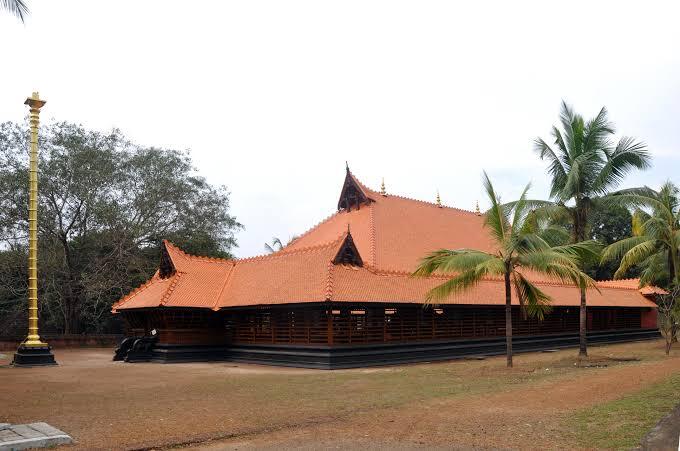
The crown jewel of the campus is its traditional theatre hall. Historically, Koothambalams were restricted inside Hindu temple compounds. Kalamandalam’s Koothambalam, built in the traditional Kerala architectural idiom with teak pillars and tiled roofing, was the first built outside a temple wall—symbolizing that the arts belong to humanity, not just ritual enclosures. Look closely at the wooden pillars, and you’ll see the intricate carvings of the 108 Karanas (classical dance postures) from Bharata Muni’s Natya Shastra.
The Vallathol Museum & Samadhi
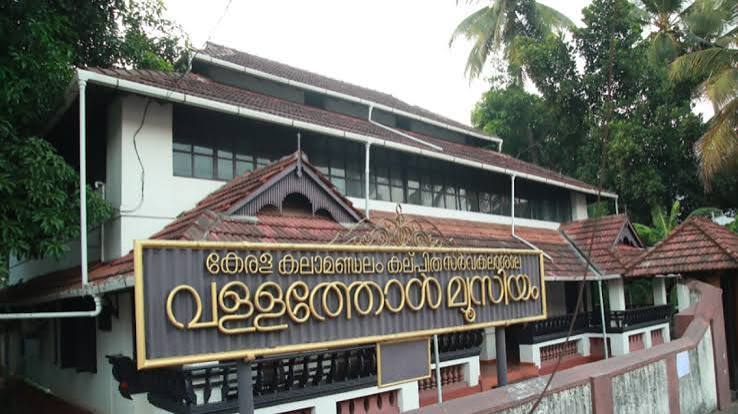
Located near the historic riverside Nila campus, the museum preserves the handwritten manuscripts, awards, and personal memorabilia of Mahakavi Vallathol. Nearby lies the poet’s samadhi (memorial), situated quietly beside the river that inspired so many of his verses.
5. Breaking Tradition to Save It: Gender Inclusivity
For centuries, forms like Kathakali were strictly the domain of men (with male actors playing female roles), while Mohiniyattam was reserved exclusively for women.
In recent years, Kalamandalam took bold structural decisions to decouple artistic merit from gender. In 2024, the institution officially adopted an all-inclusive admissions policy across every department. Today, young women train in the physically demanding rigors of Kathakali Vesham and temple percussion, while male dancers enroll in Mohiniyattam. It is a modern step that proves heritage thrives best when it adapts without diluting its technical core.
6. Planning Your Visit
Kalamandalam welcomes culture enthusiasts, researchers, and travelers through structured campus experiences.
Important: This is an active academic university, not a theme park. Visitors must book in advance to observe classes without disrupting the rigorous training schedule.
-
Address: Vallathol Nagar, Cheruthuruthy, Thrissur District, Kerala – 679531
-
Contact: 04884 262418 |
info@kalamandalam.ac.in -
Website: kalamandalam.ac.in
How to Get There
-
By Train: The nearest rail stop is Vallathol Nagar, but most long-distance trains stop at Shoranur Junction (just 3 km away across the bridge) or Thrissur Railway Station (approx. 32 km).
-
By Air: Cochin International Airport (COK) is roughly 85 km south; Calicut International Airport (CCJ) is about 80 km northwest.
-
Visitor Programs: The “A Day with the Masters” tour is the best way to experience the campus, offering guided access to morning practice sessions, the museum, the costuming unit, and the Koothambalam. Check their official website for current booking slots and timings.