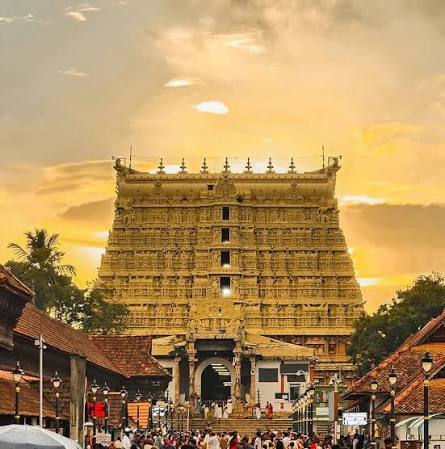
Sree padmanabhaswamy temple – the richest temple in the world
Inside the heart of Thiruvananthapuram, behind towering stone walls and buzzing bazaar streets, stands a temple that feels less like a tourist landmark and more like a fortress holding the secrets of an empire.
Sree Padmanabhaswamy Temple gained global notoriety in 2011 when court-ordered teams pried open centuries-old subterranean vaults, unearthing an estimated $20+ billion in gold coins, jewel-encrusted crowns, solid-gold thrones, and heaps of uncut rubies. The headlines immediately dubbed it the “richest temple in the world.”
Yet, reducing this shrine to its monetary valuation misses what makes it truly staggering: its intense living ritualism, centuries of royal devotion, architectural grit, and an unopened door that remains one of the world’s greatest real-life enigmas.
The King Who Became a Servant
The story of the temple is inseparable from the Travancore dynasty. In 1750, the legendary ruler Marthanda Varma did something unprecedented: he performed Thrippadidanam, placing his royal sword before the deity and surrendering his entire kingdom to Lord Padmanabha.
From that day on, Travancore was governed in the god’s name. Its monarchs ceased calling themselves sovereigns; they assumed the title Padmanabha Dasa—servants of the Lord. Every single morning, the Maharajah walked barefoot to the temple before conducting affairs of state. The unimaginable wealth inside wasn’t an eccentric hoard; it was accumulated offerings from a royal line that viewed themselves solely as caretakers, an ethos that the Supreme Court of India upheld in a historic 2020 verdict protecting the royal family’s administrative role.
The Mystery of the Kallaras (and the Door Nobody Will Open)
The temple’s wealth was stored across underground chambers designated Kallaras A through F.
When Vault A was opened in 2011, inventory teams were stunned: antique Roman coins, 18-foot gold chains, thousands of gold vessels, and a solid-gold statue of Mahavishnu weighing over 30 kilograms.
Then came Vault B.
According to temple lore and astrological consultations (Ashtamangala Devaprashnam), Vault B is guarded by divine forces and cobras, secured by mystical sound-vibrations rather than standard locks. Local legend warns that forcing it open risks catastrophic misfortune for the region. While some historical accounts suggest an outer chamber was accessed decades ago, the innermost sanctum of Vault B was deliberately left untouched during the 2011 Supreme Court inventory. It remains firmly shut—keeping the temple’s aura of ancient mystique very much alive.
The Anantha Shayanam: A Deity Seen Across Three Doors
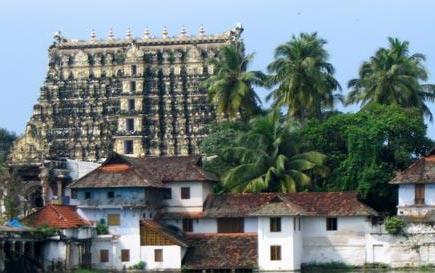
Architecturally, the temple is an imposing fusion of towering Dravidian stonecraft and sloped, teak-heavy Kerala design. The seven-tier eastern gopuram dominates the skyline, but the true spectacle is in the inner sanctum (garbhagriha).
The presiding deity, Lord Vishnu, is depicted reclining on the cosmic serpent Adi Shesha. The idol stretches roughly 18 feet long and isn’t sculpted from simple granite; it is cast from an ancient Ayurvedic herbal and mineral blend called Katu-Sarkara, internally housing 12,008 sacred Salagrama stones brought from Nepal.
Because the idol is so massive, you cannot view it all at once. Devotees line up in the dim, lamp-lit sanctum to peer through three distinct doorways:
-
The First Door: Shows the serene, crowned face of the Lord under the serpent’s hoods, his right hand resting over a Shiva lingam.
-
The Second Door: Reveals the lotus sprouting from his navel, holding Lord Brahma.
-
The Third Door: Shows the divine feet, alongside the sages Markandeya and Bhrigu.
Essential Visiting Realities: What Nobody Warns You About
Visiting Padmanabhaswamy Temple isn’t like stepping into a conventional monument. It enforces strict, non-negotiable traditions:
-
The Dress Code is Absolute:
-
Men must remove all upper garments (no shirts, vests, or t-shirts) and wear a clean mundu (dhoti) tied around the waist.
-
Women must wear sarees, half-sarees, or a traditional dhavani. Salwar kameez and western clothes are barred, though wrap-around dhotis are rented out near the entrance to cover unapproved attire.
-
-
Strict Technology Ban: Phones, smartwatches, cameras, belts with large metallic buckles, and tobacco products must be deposited in cloakrooms at the outer gates.
-
Non-Hindus: Traditionally, entry past the inner gates is restricted to practicing Hindus.
-
Timings: Darshan happens in tight morning and evening windows (usually around 3:30 AM to 12:00 PM, and 5:00 PM to 7:20 PM, broken into specific pooja intervals). Going early in the morning avoids both the brutal coastal humidity and peak pilgrimage queues.
What to Explore Around the East Fort Complex
If you make the trip, don’t just turn back after darshan:
-
Padmatheertham: The expansive sacred temple pond situated right outside, mirrored against the reflection of the massive gopuram.
-
Kuthiramalika (Mansion of Horses): Located steps away from the temple, this 19th-century palace built by the composer-king Swathi Thirunal showcases 122 teak-carved horses holding up the roof beams, along with royal crystal thrones and musical instruments.
The bullion and diamonds made Padmanabhaswamy Temple a global sensation, but watching oil lamps flicker against granite pillars while temple drums thunder at dusk proves its actual wealth is something modern estimates can’t calculate.