Top 5 badminton coaches in the world
Badminton is brutal. It’s the fastest racket sport on the planet, demanding split-second reflexes, chess-like anticipation, lung-bursting endurance, and nerves of steel.
When a player climbs the podium at the Olympics, they get the flowers, the anthem, and the spotlight. But behind every crisp cross-court slice and every 400 km/h jump smash is a coach standing courtside—clipboard in hand, hoarse from shouting instructions, having spent thousands of pre-dawn hours turning raw talent into a lethal competitor.
Coaching isn’t just feeding multi-shuttle drills until a player drops from exhaustion. It’s biomechanics, psychological warfare, game management, and culture building.
While the debate over the “greatest ever” is always subjective, five tacticians have fundamentally changed modern badminton. Here is a look at the architects behind the legends—and the real lessons any player or coach can steal from them.
1. Li Yongbo (China)
The Legacy: The architect of the Chinese badminton dynasty.

Love him or hate him, Li Yongbo ran one of the most dominant sports machines in human history. Taking over China’s national team in the early 1990s, he built an assembly line of world beaters across all five disciplines. The zenith came at London 2012, where China completed an unprecedented clean sweep of all five Olympic gold medals.
Under his watchful eye, players like Lin Dan, Zhang Ning, and the devastating men’s doubles duo Cai Yun & Fu Haifeng became household names.
The Philosophy: Ruthless Precision & Militaristic Depth
Li didn’t believe in relying on a single generational prodigy. He built an ecosystem where the squad’s reserve players were strong enough to win world tour titles.
-
Micro-efficiency: Work on recovery steps until they are automated. If a player was half a shoe-length out of position, the drill restarted.
-
Pressure inoculation: Internal ranking matches inside the Chinese training hall in Beijing were often more stressful than BWF finals. By the time players faced foreign rivals, the pressure felt routine.
Player Takeaway: Stop practicing only what you love. If your backhand clear is weak or your backcourt drop lacks disguise, that’s where your entire training session belongs. Mastery is built in the drills you dread.
2. Park Joo-bong (South Korea / Japan)
The Legacy: The doubles maestro who built Japanese badminton from scratch.
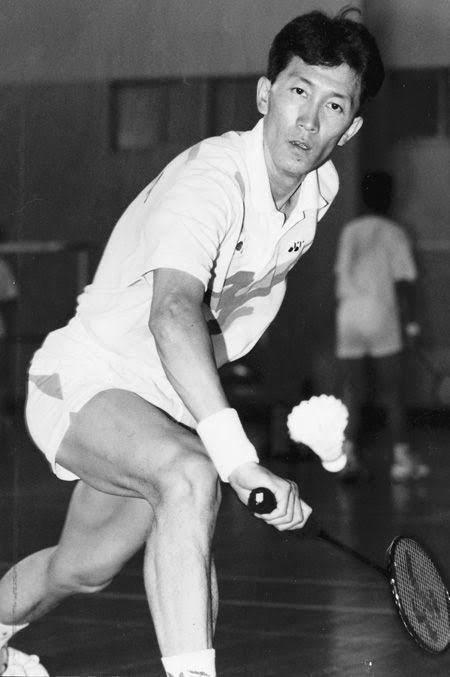
As a player, Park Joo-bong was practically unbeatable, collecting an Olympic gold (1992) and multiple World Championships. But his second act as a coach proved even more astonishing.
When Park took charge of Japan’s national team in 2004, the country was an international afterthought. Within a decade, he transformed Japan into an absolute powerhouse, culminating in Olympic golds for pairs like Misaki Matsutomo & Ayaka Takahashi, world titles for Kento Momota, and dominant men’s doubles pairs like Hiroyuki Endo & Yuta Watanabe.
The Philosophy: Spatial Geometry & Unspoken Chemistry
Doubles isn’t two singles players sharing a court; it’s a living, breathing unit moving on a string.
-
Angles and the “Front Three Feet”: Park revolutionized the serve-and-return battle. Games are won or lost in the first three shots.
-
Synchronized Rotation: Teaching partners to move instinctively based on shuttle trajectory rather than waiting to see where the other dives.
Player Takeaway: In doubles, power is useless if your positioning is poor. Master the flat exchanges, cut off angles early at the net, and communicate constantly with your partner.
3. Morten Frost (Denmark)
The Legacy: “Mr. Badminton” and the European standard of tactical genius.

In an era dominated by Asian giants, Denmark’s Morten Frost stood tall with four All England titles and a playing style that earned him the moniker “Mr. Badminton.” Later, as a high-performance director and coach—notably working with the Danish and Malaysian national teams—he brought an intellectual, cerebral touch to training.
The Philosophy: Patient Construction & Independent Thinking
Frost proved you don’t need to be the most explosive athlete in the stadium to win.
-
The Setup Rally: Every shot should ask a question. Use clears to pin opponents deep, tease them with tight tumbling net shots, and only pull the trigger on an outright smash when they are completely off balance.
-
Self-Coaching on Court: Frost never wanted robots who looked at the bench after every rally. He coached athletes to diagnose an opponent’s patterns live on court and make their own adjustments.
Player Takeaway: Stop going for clean winners on shot number two. Work the rally. Move your opponent into uncomfortable corners, wait for the short lift, and strike when the court is wide open.
4. Pullela Gopichand (India)
The Legacy: The man who put Indian badminton on the global map.
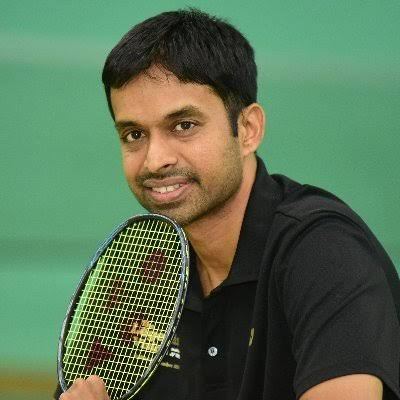
When Gopichand won the All England in 2001, Indian badminton had minimal infrastructure. After retiring, he literally mortgaged his house to build an academy in Hyderabad.
The gamble paid off in historic fashion. Gopichand personally molded Saina Nehwal (Olympic Bronze, 2012) and P. V. Sindhu (Olympic Silver 2016, Bronze 2020, World Champion 2019), while guiding Kidambi Srikanth to World No. 1. He single-handedly shifted the sporting culture of an entire nation.
The Philosophy: Relentless Work Ethic & Total Devotion
Gopichand’s training days start at 4:15 AM. His methodology is rooted in old-school grit paired with meticulous technical repetition.
-
Physical Thresholds: Gopichand believes stamina directly feeds mental resilience. When your lungs are burning at 19-19 in the deciding set, sheer conditioning keeps your shots sharp.
-
Holistic Mentorship: He takes total responsibility for his athletes—overseeing diet, sleep, gym conditioning, and mindset.
Player Takeaway: Talent gets you noticed; conditioning and discipline keep you on court. When matches turn into wars of attrition, mental toughness is almost always backed by how hard you ran in practice.
5. Herry Iman Pierngadi (Indonesia)
The Legacy: “Coach Naga Api” (The Fire Dragon) and the maker of world #1 pairs.

Indonesia lives and breathes badminton, and their men’s doubles teams are legendary. At the center of that success for decades has been Herry IP.
He is the mastermind behind Marcus Fernaldi Gideon & Kevin Sanjaya Sukamuljo (“The Minions”), Mohammad Ahsan & Hendra Setiawan (“The Daddies”), and Fajar Alfian & Muhammad Rian Ardianto.
The Philosophy: Blistering Pace & Fluid Intuition
Herry IP doesn’t try to cram different players into a rigid textbook box. Instead, he pairs contrasting personalities and skill sets together to create chaos for the opposition.
-
Front-Court Domination: Giving flair players like Kevin Sanjaya the freedom to intercept, flick, and deceive at the net, backed by a relentless rear-court workhorse.
-
Counter-Attacking Defense: Turning an opponent’s smash directly into your own attack with soft blocks and punch drives.
Player Takeaway: Play to your unique strengths. If you have lightning-fast wrists, build your game around net kills and deceptive pushes. If you hit like a sledgehammer, work on quick transitions so you get more overhead opportunities.
What Actually Separates Elite Coaching from Average Practice?
| Metric | Everyday Practice | Elite Academy Coaching |
| Drill Focus | Hitting comfortable, clean shots | Practicing recovery, bad-bounce returns, and forced errors |
| Tactical Prep | “Play your game and hit hard” | Mapping opponent shot patterns and attacking specific vulnerabilities |
| Doubles Dynamics | Two players taking turns | Coordinated rotations, set plays off the serve, and continuous defensive transitions |
| Physical Work | Occasional jogging/weights | Footwork deceleration drills, core stability, and high-intensity match simulations |
| Mindset | Frustration after mistakes | Treating unforced errors as data points to make instant tactical tweaks |
Finding the Right Coach for Your Own Game
You don’t need a national team coach to make rapid progress, but you do need someone who treats your training with intent. When evaluating a coach or academy:
-
Do they fix footwork first? If a coach only feeds you smashes from the mid-court without correcting your split-step, split-second recovery, or lunging technique, run.
-
Is feedback specific? Look for coaches who say, “You’re hitting the shuttle three inches behind your body, which is causing your smash to float,” rather than just yelling “Hit harder!”
-
Do they adapt to your build? A tall, heavy-hitting singles player requires a completely different tactical roadmap than a shorter, fleet-footed counter-puncher.
Great players aren’t born on the podium; they’re built in quiet, sweaty halls under the watchful eyes of coaches who refuse to let them settle for average.