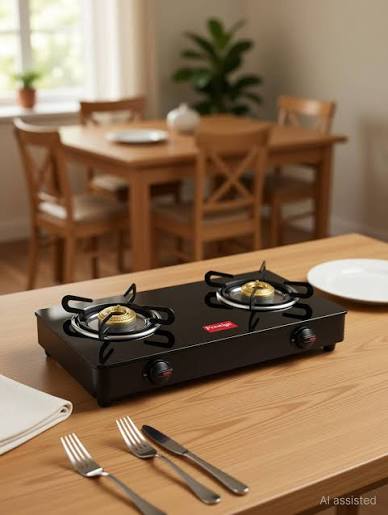
Top 5 gas stove brands in india
Buying a gas stove should be simple, but the moment you start browsing, you run into glass tops, brass burners, auto vs. manual ignition, and wildly cramped burner layouts. Indian cooking is hard on cooktops: heavy cast-iron tawas, whistling pressure cookers, and daily turmeric-tinted spills will quickly expose a flimsy stove.
| Brand | Best For | Standout Strength | Watch Out For |
| Prestige | Most households | Vast service network & reliable brass burners | Glass replacement claims can be tedious |
| Elica | Modular kitchens & aesthetics | Sleek glass designs with sturdy pan supports | Slightly pricier than domestic mass brands |
| Glen | Durability & heavy cookware | Forged brass burners and heavy-gauge bodies | Fewer basic entry-level budget models |
| Sunflame | Practical, no-nonsense cooking | Solid stainless-steel workhorses at fair prices | Modern glass designs look somewhat dated |
| Butterfly | Value-for-money buyers | Affordable 2- & 3-burner setups | Lighter pan supports on bottom-tier models |
1. Prestige: The Ubiquitous Default
Prestige is the Maruti Suzuki of Indian kitchens. Whether you want a simple two-burner stainless-steel box for a rented apartment or a sleek frameless glass cooktop like the Marvel or Royale Plus, they make it.
-
The good: Unbeatable after-sales service and parts availability. If a knob breaks or a burner valve clogs five years down the road, your local kitchen hardware store will have the spare part on hand.
-
The reality: Their entry-level glass tops use basic toughened glass—if you place an oversized bati cooker or tawa that reflects heat down onto the glass, you risk thermal shock cracks.
-
Best suited for: Anyone who wants a reliable daily driver with accessible warranty support across India.
2. Elica: The Modular Kitchen Favorite
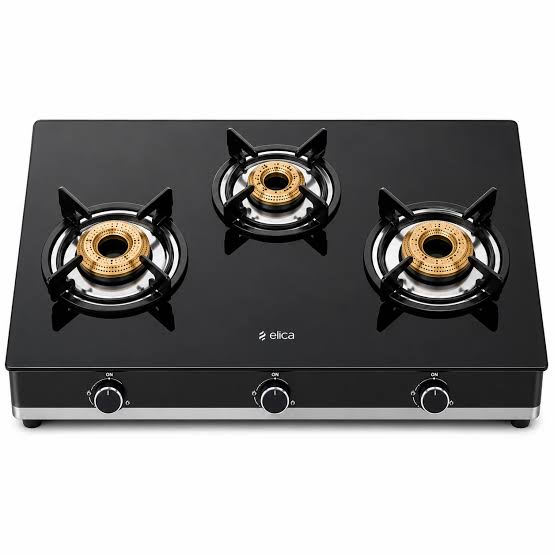
Elica transitioned from kitchen chimneys to cooktops and built a reputation on modern aesthetics. Models like the Vetro series feature clean lines, dark toughened glass, and European-style knobs.
-
The good: Strong visual appeal that complements modern slab countertops. Their cast-iron or heavy-duty pan supports keep round-bottomed kadhais from wobbling.
-
The reality: Auto-ignition models in this segment require periodic battery swaps or piezo spark servicing; dried dal boil-overs will gum up the spark electrodes quickly if you don’t clean them immediately.
-
Best suited for: Homeowners setting up a modern modular kitchen who prioritize looks alongside everyday cooking.
3. Glen: Built for Heavy Cooking
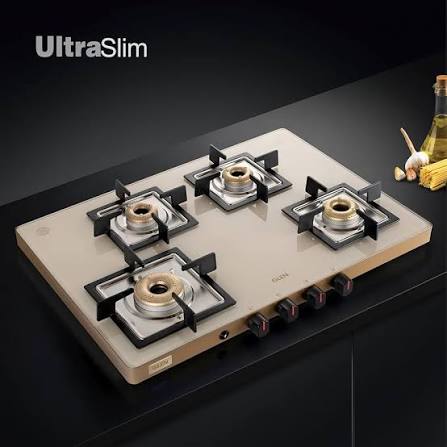
Glen doesn’t flood the market with rock-bottom budget options, focusing instead on sturdier builds. Their forged brass burners—which are denser and handle sustained high-heat searing better than standard hollow brass—are their calling card.
-
The good: Exceptional build quality. The stove frames rarely flex under heavy 5-liter pressure cookers, and the flame spread on low simmer settings is smooth and consistent.
-
The reality: You pay a premium for the engineering, and their retail footprint in smaller Tier-3 towns is smaller than Prestige or Sunflame.
-
Best suited for: Serious cooks who regularly make biryanis, slow-simmered gravies, and heavy meals that stress light stove frames.
4. Sunflame: The Practical Workhorse
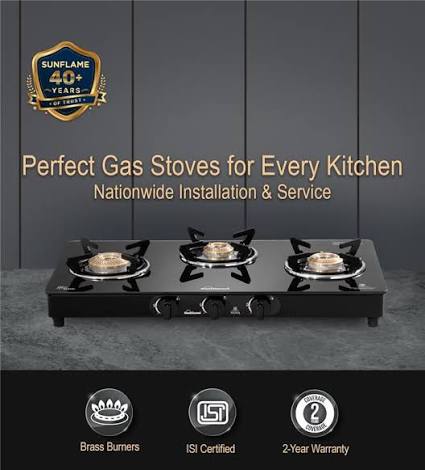
Sunflame has sat on Indian countertops for decades. While they produce modern glass tops, their traditional stainless-steel stoves remain their most reliable legacy.
-
The good: Zero anxiety about cracked glass. You can drop a hot steel lid, scrub the frame with Scotch-Brite, or slide heavy handis across the supports without babying the surface.
-
The reality: Stainless-steel models scratch over time and show water spots unless wiped dry with a microfiber cloth.
-
Best suited for: Rental homes, joint families, and practical cooks who want zero maintenance and durable steel.
5. Butterfly: Solid Value on a Budget
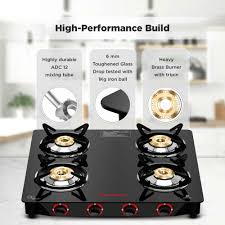
Hailing from South India, Butterfly has built massive loyalty through accessible pricing and dependable kitchen basics. Their two- and three-burner glass tops (like the Smart series) regularly rank among the most affordable options online.
-
The good: Excellent price-to-performance ratio. You get genuine brass burners and decent flame output without spending big.
-
The reality: The pan supports and sheet-metal base on entry models are noticeably lighter than Glen or Prestige. Stirring a thick halwa or dry sabzi might cause the lightweight stove to shift slightly on smooth granite.
-
Best suited for: Bachelors, small families, and students looking for a reliable stove without overspending.
What Actually Matters Before You Buy
-
Burner Spacing (The 3-Burner Trap): Many compact 3-burner stoves squeeze three burners onto a 60 cm frame. Try placing a 26 cm kadhai, a pressure cooker, and a tea pan together, and they will collide. Look for an offset triangular layout or a stove wider than 70 cm if you plan to use all three simultaneously.
-
Forged Brass vs. Pressed Brass: Forged brass burners are heavier, darker, and don’t warp under high-heat frying. Pressed or lightweight brass can warp over several years of high-heat cooking, leading to uneven yellow flames.
-
Glass Tops vs. Bati Cookers: Toughened glass can handle direct downward weight, but it handles localized radiant heat poorly. Inverted tawas, heavy tandoor pans, or bati cookers trap heat and reflect it downward, which can shatter glass tops. If you cook lots of batis or roomali rotis, stick to stainless steel.
-
LPG vs. PNG: Pipeline natural gas (PNG) runs at lower pressure than cylinder gas (LPG). Never connect an LPG stove straight to a PNG line without getting the burner nozzles changed and recalibrated by an authorized technician, or you will get weak, flickering flames and soot.