Top 5 runners in india: greatest indian runners of all time
When people think of running, the mind usually jumps to the glamour of the 100-metre sprint—the raw, ten-second explosion of speed. But if you look at India’s athletics history through that narrow lens, you miss almost everything that makes it special.
India’s true track legacy wasn’t built on straight sprint shootouts. It was forged in the lung-burning grit of the 400-metre bend, the technical heartbreak of the hurdles, and the relentless grind of distance racing.
Ranking athletes across eras is always subjective. You can weigh raw timings, Olympic impact, Asian domination, or sheer cultural resonance. Taking all of that into account—the pioneer grit, the national records, and the global breakthroughs—here is an editorial ranking of the five most influential runners India has ever produced.
Quick Look: India’s Running Legends
| Rank | Athlete | Signature Event | The Defining Achievement |
| 1 | Milkha Singh | 400m | 4th at Rome 1960 Olympics; double Asian Games & CWG Gold |
| 2 | P. T. Usha | 400m / 400m Hurdles | 4th at LA 1984 Olympics; sweeping dominance across Asia |
| 3 | Avinash Sable | 3000m Steeplechase | CWG Silver, Asian Games Champion, 8:09.91 National Record |
| 4 | Hima Das | 400m | 2018 World U20 Champion; 50.79s National Record |
| 5 | Jyothi Yarraji | 100m Hurdles | Asian Champion; 12.78s National Record |
- Milkha Singh: The Standard Against Which All Are Measured
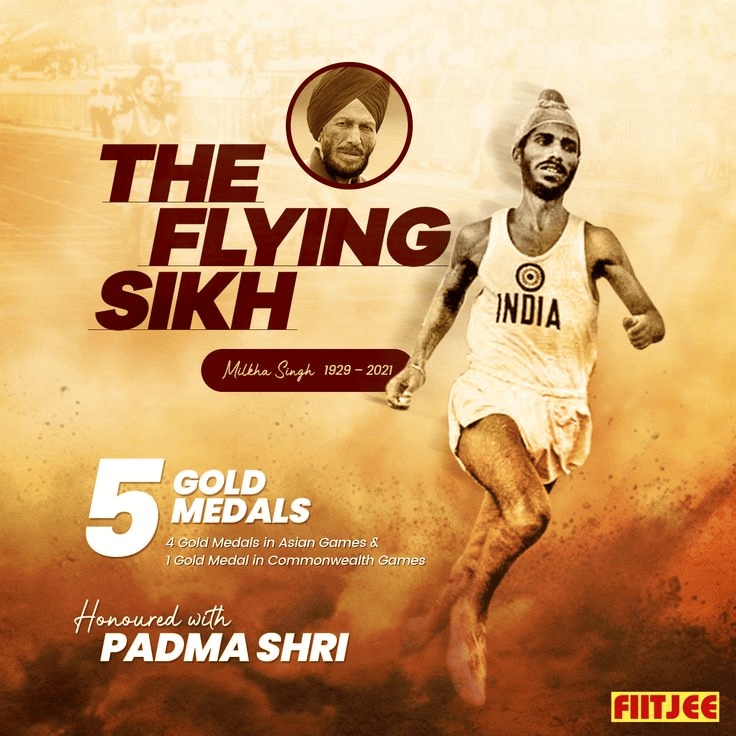
You cannot write about Indian track without starting with Milkha Singh. Long before sports science, synthetic tracks, and corporate sponsorships existed in India, Milkha ran on sheer will.
His defining moment came in the 400m final at the 1960 Rome Olympics. In one of the most fiercely contested races in Olympic history, Milkha clocked 45.6 seconds, finishing fourth and missing out on an Olympic bronze by just 0.13 seconds. That race stood as a national benchmark for decades, but reducing his career to a near-miss does him a disservice.
Milkha was a dominant champion across Asia. He claimed double gold (200m and 400m) at the 1958 Tokyo Asian Games, retained his 400m title in Jakarta in 1962, and took gold in the 440-yard dash at the 1958 Cardiff Commonwealth Games—becoming the first Indian male athlete to top a CWG podium. Orphaned during the trauma of Partition, his journey into a global sporting icon turned him into something larger than athletics: a national symbol of resilience.
- Primary Events: 400m, 200m
- The Calling Card: 45.6s at Rome 1960
- Legacy: The original pioneer who proved Indian sprinters belonged on the world stage.
- P. T. Usha: The Queen Who Changed Everything
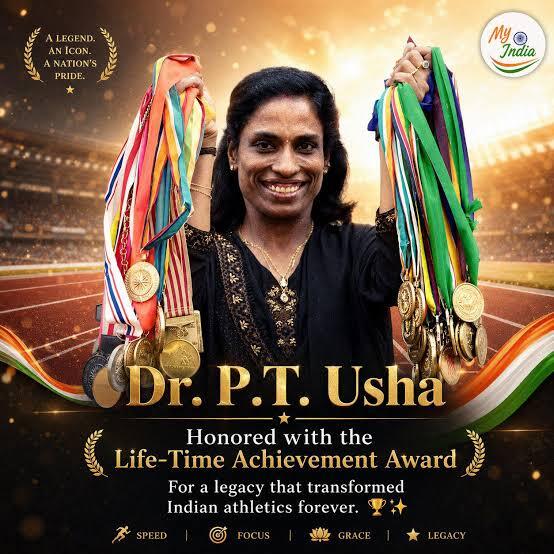
If Milkha showed what was possible for Indian men, P. T. Usha kicked the door wide open for Indian women. Hailing from Payyoli in Kerala, Usha’s range and work ethic redefined domestic expectations.
Her performance at the 1984 Los Angeles Olympics remains etched in Indian sporting memory. Running the 400m hurdles—an event she took up only months before the Games—she stormed to the final and missed bronze by a brutal one-hundredth of a second (0.01s). Her timing of 55.42 seconds was so far ahead of its time domestically that it stood untouched as an Indian national record for roughly four decades before Vithya Ramraj matched it.
Beyond LA, Usha dismantled fields across Asia. Between the 1986 Seoul Asian Games—where she swept four golds and a silver—and multiple Asian Championships, she proved that an Indian woman could dominate continental track and field year after year.
- Primary Events: 400m Hurdles, 400m, 100m/200m Sprints
- The Calling Card: 55.42s at Los Angeles 1984
- Legacy: Normalized world-class ambition for female Indian athletes and remains the bedrock of Indian track culture.
- Avinash Sable: Breaking the East African Stranglehold
For decades, middle- and long-distance running was written off as an impossible arena for India on the global stage. East African runners set the pace, and the rest of the world followed far behind.
Avinash Sable shattered that assumption.
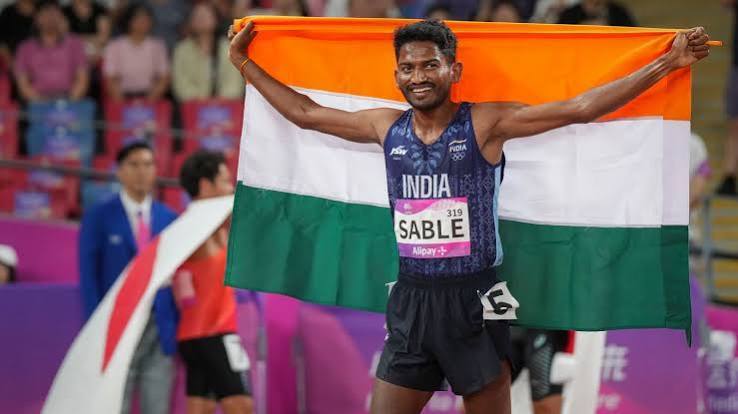
Competing in the 3000m steeplechase—an unforgiving event featuring 28 solid barriers and 7 water jumps—the army man from Beed, Maharashtra, rewrote the script. His breakthrough came at the 2022 Birmingham Commonwealth Games, where he broke his own national record with an 8:11.20, pushing Kenya’s Abraham Kibiwot to the absolute wire to claim silver. It was the first time since 1994 that a non-Kenyan athlete stood on the men’s steeplechase podium at the Commonwealth Games.
Sable hasn’t looked back, lowering the national record to 8:09.91, winning Asian Games gold, and regularly holding his own in elite Diamond League fields.
- Primary Event: 3000m Steeplechase
- The Calling Card: 8:09.91 (National Record) & 2022 CWG Silver
- Legacy: Proved that with elite pacing, barrier technique, and tactical awareness, Indian distance runners can challenge the very best.
- Hima Das: The Historic Global Gold
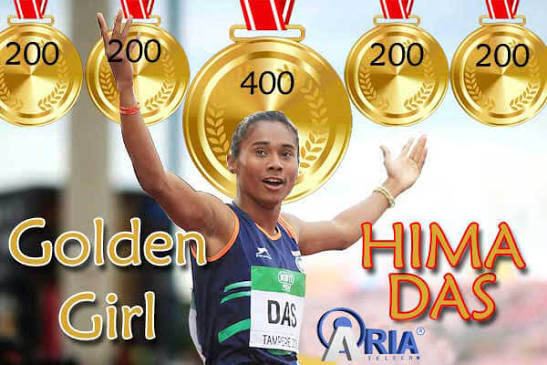
Until July 2018, no Indian track athlete—senior, junior, male, or female—had ever won a global title on the track at an international championship.
Then came an 18-year-old from Dhing, Assam.
At the 2018 World U20 Championships in Tampere, Finland, Hima Das delivered a masterclass in bend running. Coming off the final curve in third gear, she shifted into overdrive over the home straight to clock 51.46 seconds and snatch the World U20 400m gold.
Later that year at the Jakarta Asian Games, she lowered her personal best to 50.79 seconds—a mark that still stands as the Indian women’s 400m national record. While injuries and back issues forced her to switch focus to shorter sprints in later years, her breakthrough in Finland made history: she delivered the psychological proof that an Indian runner could cross the line first on a global track.
- Primary Events: 400m, 200m
- The Calling Card: 50.79s (National Record) & 2018 World U20 Gold
- Legacy: The first global gold medallist on the track for India.
- Jyothi Yarraji: Rewriting the Hurdle Playbook
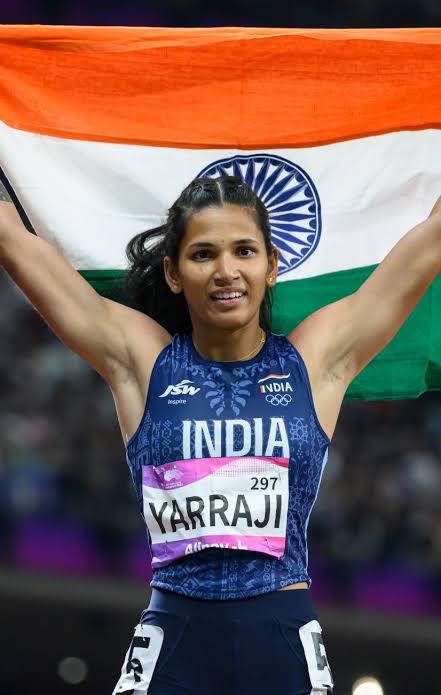
The 100-metre hurdles is a ruthless sprint discipline where clean rhythm matters just as much as raw turnover. A clipping of a single hurdle costs you the race.
Jyothi Yarraji has turned that razor-thin margin of error into an art form. Over the past few seasons, the Visakhapatnam native has taken a stranglehold on the national record, shaving hundredths of a second off her own times and lowering the mark to a sharp 12.78 seconds.
Yarraji isn’t just fast at domestic meets; she has repeatedly delivered against international competition. An Asian Champion and Asian Games silver medallist, she has proved her chops across European circuits, regularly dipping into the 12.80s and keeping Indian sprint-hurdling relevant on the international stage.
- Primary Event: 100m Hurdles
- The Calling Card: 12.78s (National Record) & Asian Championship Gold
- Legacy: Modernized Indian sprint hurdling, proving technique and speed can thrive together on the European circuit.
So, Who Is Actually the “Fastest” in India?
There is no single answer to that question because track doesn’t operate in a vacuum:
- If you mean flat-out straight-line speed, you look at 100m national champions and record holders.
- If you mean historic quarter-mile endurance, Milkha Singh’s 45.6s and Hima Das’s 50.79s anchor the men’s and women’s 400m marks.
- If you talk about speed over barriers, Jyothi Yarraji’s 12.78s in the 100m hurdles is the fastest any Indian woman has ever navigated the track.
- If you mean endurance speed, Avinash Sable averaging under 2:44 per kilometre while clearing water barriers at 8:09.91 puts him in a class of his own.
India’s running scene is evolving. What started with isolated individual geniuses fighting against the odds on cinder tracks has expanded into a broader ecosystem of sports science, altitude camps, and tactical coaching. The records on this list are tough, but with the momentum building in Indian track and field right now, none of them are untouchable.