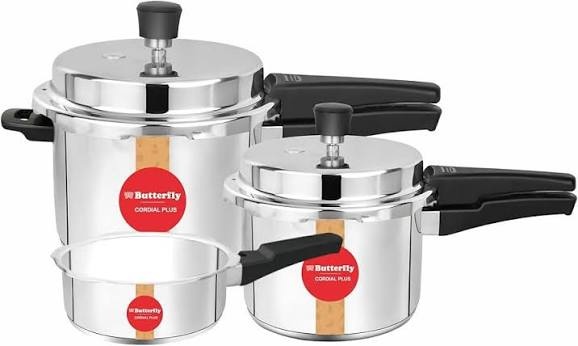
Top 5 stainless steel pressure cooker brands in india
A good pressure cooker is the backbone of an Indian kitchen. Between daily tadkas, whistling dal, steamed rice, and Sunday mutton curries, it takes more daily abuse on the burner than almost any other utensil you own.
While cheap aluminium cookers have ruled Indian stoves for decades, households are steadily ditching them for stainless steel. High-grade steel doesn’t react with sour tamarind or tomato curries, won’t pit or turn dull grey over time, and easily handles both gas flames and induction cooktops.
The challenge isn’t finding a steel cooker—it’s picking one with proper heat distribution so your dal doesn’t burn to the bottom in three minutes.
Quick Brand Comparison
| Brand | Standout Strength | Flagship Steel Series | Lid Style | Best For |
| Hawkins | Fail-safe pressure locking & heavy sandwich bases | Stainless Steel Contura | Inner-lid | Safety-first buyers, traditional cooks |
| Prestige | Spill-control lids & massive service reach | Deluxe Alpha Svachh | Outer & Inner | Modern kitchens, hassle-free maintenance |
| Vinod | Triply construction (zero scorching/hot spots) | Platinum Triply Stainless Steel | Outer-lid | Even heat lovers, cooking thick curries |
| Butterfly | Affordable steel utility & solid build | Curve Stainless Steel | Outer-lid | Value-conscious everyday home cooks |
| Pigeon | Lowest entry price for stainless steel | Special Stainless Steel | Outer-lid | Tight budgets, bachelors, backup cookers |
1. Hawkins: The Heavy-Duty Safety King
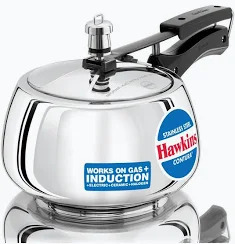
Hawkins is a household legend for one big reason: its inner-lid mechanism. Because the lid slots inside the rim, it cannot be physically opened until every ounce of steam pressure drops.
-
Why it works: Their stainless steel range (especially the belly-shaped Contura) features a thick, encapsulated sandwich base. That extra slab of aluminium tucked between steel layers stops the cooker from developing scorching “hot spots.” The gasket also sits inside the rim, shielded from direct cooking flame, so it lasts significantly longer.
-
Watch out for: Inner-lid designs require a specific twist-and-tilt wrist motion to open and close. If you grew up using outer-lid cookers, there is a short learning curve.
2. Prestige: Modern Gimmicks That Actually Work
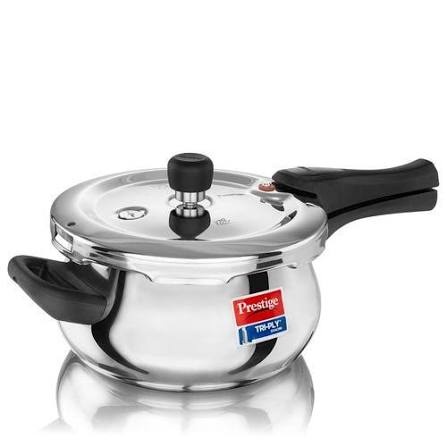
Prestige dominates the outer-lid market with smart innovations designed around real Indian cooking hassles.
-
Why it works: Their Svachh lid series solves the messiest problem in Indian cooking: frothy dal water spraying all over your countertop. The lid is deeply concave, channeling bubbling starch around the vent pipe instead of spitting it across your kitchen tiles. Their Alpha base is heavy, flat, and grips induction cooktops securely.
-
Watch out for: Outer-lid rubber gaskets stretch out and wear down faster than inner-lid designs; plan to replace the gasket once every 12–18 months.
3. Vinod: The Triply Heat Master
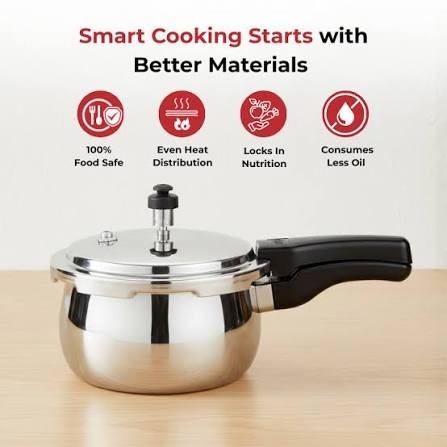
Standard stainless steel is a notoriously poor heat conductor. If you cook thick rajma or sambar in single-ply steel, the bottom burns before the top cooks. Vinod solved this by going all-in on Triply technology.
-
Why it works: Instead of just a thick base plate, the entire body—bottom and sides—is forged with three bonded layers (food-grade 304 steel inside, pure aluminium core, magnetic steel outside). Heat runs evenly up the walls, cutting cooking time and drastically reducing burnt bottoms.
-
Watch out for: Triply bodies are noticeably heavier to lift when full, and they sit on the pricier end of the spectrum.
4. Butterfly: The Practical Mid-Ranger
A dominant household name across South India, Butterfly hits the sweet spot for families who want stainless steel durability without paying premium flagship prices.
-
Why it works: Their Curve stainless steel line has a wide, rounded base that makes stirring and sautéing spices (talikka) effortless before you slap the lid on. The handles are thick, ergonomic, and don’t loosen or wobble easily under heavy weight.
-
Watch out for: Base plates are slightly thinner than Hawkins or Vinod, meaning you need to keep flames on medium-low once full pressure is reached.
5. Pigeon: The Budget Entry
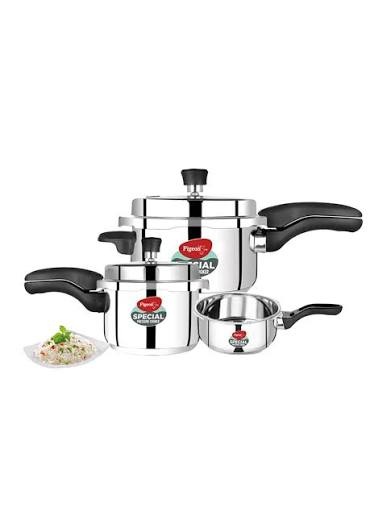
If your budget is tight and you want to abandon toxic aluminium without spending thousands, Pigeon is the most accessible entry point on the market.
-
Why it works: Widely available across online discount sales and local hardware shops. It gives you basic, functional food-grade steel with an induction plate for roughly the cost of a mid-tier aluminium cooker.
-
Watch out for: Bakelite handle plastics can feel brittle over time, and the whistles tend to run loud and leaky if the vent weight isn’t washed thoroughly.
How to Pick the Right Spec
-
Choose the Right Size:
-
1.5 to 2 Litres: Ideal for single meals, bachelors, or baby food.
-
3 Litres: The everyday workhorse for a family of 3–4 (daily rice or dal).
-
5 Litres: Essential for big Sunday biryanis, whole lentils (chana/rajma), or bone-in meats.
-
-
Base Plate vs. Triply: Never buy a steel cooker with a paper-thin, single-layer bottom. Either look for an impact-bonded sandwich base (a thick disc welded to the bottom) or full-body triply construction.
-
Spare Parts Availability: A pressure cooker is only as good as its wear-and-tear parts. Always buy a brand whose safety valves, weights, and replacement gaskets are sold at your nearest local neighborhood vessel shop. Hawkins and Prestige win hands down here.