Top 5 badminton players in the world
Badminton is in the middle of a fascinating transition. The sport has never been faster or more physically demanding, and the post-Paris 2024 Olympic cycle has completely shaken up the pecking order. Established veterans are fighting off wear and tear while a younger, tactically versatile generation takes over the podiums.
Because the Badminton World Federation (BWF) splits rankings across five distinct disciplines, there is no official single “Top 5 in the World” list. But if you look at consistency, major tournament silverware, and who controls the tempo of international badminton in 2026, five singles players stand out above the rest.
1. Kunlavut Vitidsarn (Thailand) – Men’s Singles
Kunlavut’s ascent from a three-time World Junior champion to senior world champion and Olympic silver medalist felt inevitable, but the way he plays is an outlier in modern men’s singles.
In an era defined by explosive, steep smashes and breakneck flat exchanges, the Thai star wins by slowing the game down. He treats the court like a chessboard—absorbing heavy baseline artillery, moving opponents into awkward corners, and waiting for the rally to break his opponent’s discipline. By the time an opponent realizes they’re playing Kunlavut’s slow-burn pace, the match is usually slipping away. His return to the World No. 1 spot proves that court craft and defensive anticipation still outmatch pure firepower.
2. An Se-young (South Korea) – Women’s Singles

An Se-young isn’t just winning tournaments; she is redefining what women’s singles looks like. Olympic gold, World Championship gold, and an extended stay at World No. 1 have turned her into the standard against which everyone else is measured.
Her superpower is court coverage. She retrieves shots that opponents have already celebrated, resetting rallies with high, defensive lifts or dipping drop shots. But calling her a defensive grinder misses the point—her transition game is lethal. The moment an opponent plays a slightly loose recovery shot out of frustration, she pounces at the net. Her dominance in recent finals shows why she remains the undisputed benchmark in the sport.
3. Shi Yu Qi (China) – Men’s Singles

Shi Yu Qi has long been the technical anchor of China’s men’s singles team. While injuries and inconsistent stretches have tested him over his career, his pedigree is undeniable—from an All England title early on to anchoring China in high-pressure Thomas Cup ties and World Tour Finals.
Technically, Shi is as close to text-book badminton as it gets. He doesn’t rely solely on one signature weapon; he shifts effortlessly between high-tempo attacking flurries and slow, precise baseline construction. That unpredictability makes him exhausting to prepare for. When his footwork is sharp and he’s taking the shuttle early, he can dismantle any defense on tour.
4. Akane Yamaguchi (Japan) – Women’s Singles
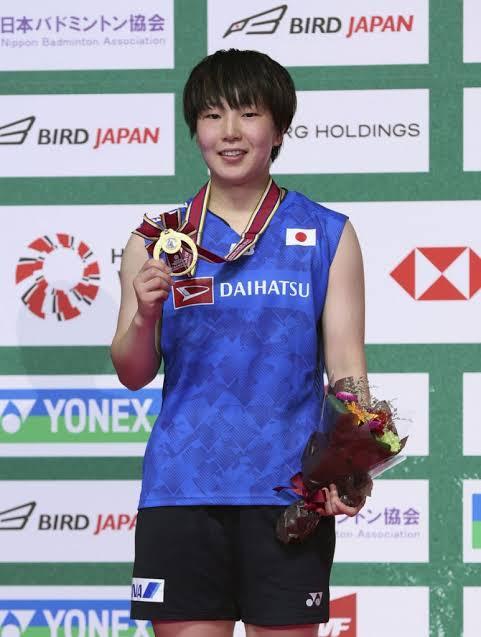
At 5-foot-1, Akane Yamaguchi has spent her entire career defying the idea that modern badminton belongs only to tall, high-leverage power hitters. A two-time World Champion and former World No. 1, she remains one of the most tenacious competitors the circuit has ever seen.
Yamaguchi’s game is built on low-center-of-gravity agility, split-second anticipation, and sheer refusal to let the shuttle hit the floor. Her classic rivalry with An Se-young showcases peak women’s singles: brutal physical rallies where precision, fitness, and recovery are pushed to the absolute limit. Even as younger players rise, her consistency at the business end of tournaments keeps her among the world elite.
5. Wang Zhi Yi (China) – Women’s Singles
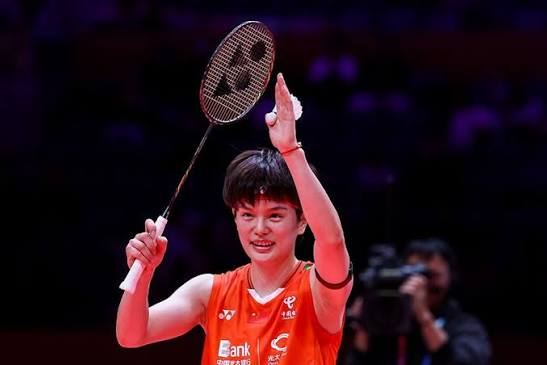
Stepping out from behind the shadow of Olympic champions in the stacked Chinese national setup is no easy task, but Wang Zhi Yi has firmly claimed her place in the top tier. Since taking the Asian Championships title, she has established herself as a regular finalist on the BWF Super 1000 circuit.
Wang blends classical Chinese technical discipline with stubborn defensive depth. She moves smoothly, controls the length of the shuttle exceptionally well from the back court, and forces opponents into long, error-prone rallies. With Chen Yu Fei taking strategic breaks post-Paris, Wang has embraced the responsibility of leading China’s women’s singles charge.
Player Profiles at a Glance
| Player | Country | Discipline | Signature Style |
| Kunlavut Vitidsarn | Thailand | Men’s Singles | Tactical pacing, absorption, and counter-punching |
| An Se-young | South Korea | Women’s Singles | Elite defensive retrieval, stamina, and sudden counter-attacks |
| Shi Yu Qi | China | Men’s Singles | Tempo variation, wrist deception, and technical precision |
| Akane Yamaguchi | Japan | Women’s Singles | Low-center footwork, relentless hustle, and quick net recovery |
| Wang Zhi Yi | China | Women’s Singles | Disciplined rally building, back-court length, and patience |
What Makes Modern Elite Badminton Different?
Watching these five play makes the game look effortless, but the modern tour demands a very specific skill set:
-
Rally Economy: Smashing every loose shuttle is a rookie trap. At the top level, smashes are returned with interest. Players like Kunlavut and An win by making the opponent cover more physical distance per stroke.
-
Defensive Resetting: It’s not enough to dig out a smash; you have to send the shuttle deep enough to buy yourself two seconds to reset your split-step.
-
Tempo Control: The best players can play three slow, high clears and suddenly drop the hammer with a sharp, flat drive into the midcourt. The change of pace—not the raw speed—is what scores points.
-
Ranking Dynamics: BWF points are rolling over a 52-week calendar. One Super 1000 title can launch a player up the rankings, but defending those points the following year creates immense tactical and physical pressure.
With talents like Anders Antonsen, Jonatan Christie, Christo Popov, and young sensations like Tomoka Miyazaki constantly shaking up the draw, the margins at the top remain razor-thin.