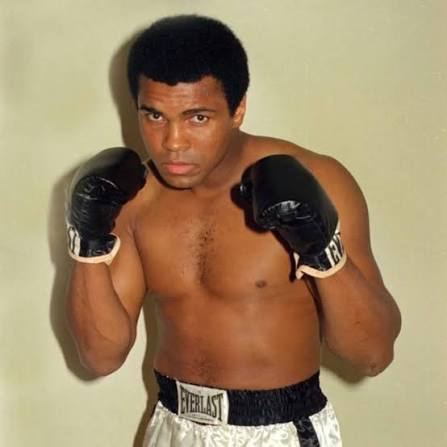
Top 5 boxers in the world
Boxing calls itself the “Sweet Science,” an ironic nod to an unforgiving craft where lightning-fast split-second calculations collide with sheer concussive force. Over a century of sanctioned prizefighting, thousands of fighters have strapped on gloves, but only a handful managed to bend the sport to their will and capture the collective imagination of the world.
Ranking the all-time greats is an endless barroom argument. How do you weigh an undefeated modern pay-per-view technician against a 1940s barnstormer who fought every three weeks? Or match the blunt trauma of a heavyweight puncher against an eight-division speedster?
By weighing world titles, the caliber of opposition, technical innovation, and historical footprint, five names consistently rise above the din.
1. Muhammad Ali: The Voice and the Ring General
-
Career Record: 56–5 (37 KOs)
-
Division: Heavyweight
-
Signature Quality: Unprecedented foot speed, tactical adaptability, psychological warfare
Before Cassius Clay arrived, heavyweight boxing was largely a plodding contest of brute force. Ali completely rewrote the blueprint. He fought with his hands dangerously low, relied on head movement and reflex slipping, and possessed footwork so buoyant it baffled seasoned sluggers.
After winning gold at the 1960 Rome Olympics, Ali shocked the world by stopping Sonny Liston in 1964. Yet his defining greatness was forged through adversity. Stripped of his titles and exiled for over three years during his athletic prime for refusing the Vietnam War draft, he returned a slower, more calculating warrior.
The second half of his career produced boxing lore: out-thinking the terrifying George Foreman in Kinshasa via the “rope-a-dope,” and enduring near-fatal warfare against Joe Frazier in their iconic trilogy. Ali was more than just a multi-time heavyweight champion; he was a global cultural lightning rod who proved fighters could possess an intellect and a conscience every bit as lethal as their right cross.
2. Sugar Ray Robinson: The Blueprint of Perfection
-
Career Record: 174–19–6 (109 KOs)
-
Divisions: Lightweight to Light Heavyweight
-
Signature Quality: Fluid combination punching, knockout power in either hand

Whenever boxing analysts use the phrase “pound-for-pound,” they are paying homage to Walker Smith Jr.—known to history as Sugar Ray Robinson. The term was coined specifically to describe him: an athlete so complete that if every fighter were scaled to the exact same weight, Robinson would beat them all.
At welterweight, Robinson was practically invincible, going 128–1–2 during his early prime. When he stepped up to middleweight, he captured the world championship five separate times, trading brutal blows with legends like Carmen Basilio, Gene Fullmer, and his arch-rival Jake LaMotta, whom he fought six times.
Robinson was rhythm personified. He could slip a hook, shift balance, and throw a six-punch flurry with knockout intentions from either side before his opponent realized where the opening was. For purists and peers—including Ali and Sugar Ray Leonard—Robinson remains the standard against which all boxing technique is measured.
3. Mike Tyson: The Terrifying Force of Nature
-
Career Record: 50–6, 2 NC (44 KOs)
-
Division: Heavyweight
-
Signature Quality: Peek-a-boo defense, slipping inside reach, explosive leverage
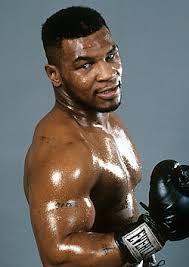
Mike Tyson
In the mid-to-late 1980s, watching a Mike Tyson fight was less about seeing who would win and more about seeing how many seconds an opponent could survive. At just 20 years and four months old, “Iron Mike” became the youngest heavyweight champion in history, tearing through Trevor Berbick to claim the WBC belt.
Under the tutelage of Cus D’Amato and Kevin Rooney, Tyson mastered the “peek-a-boo” system. Because he stood just 5-foot-10 in a division of giants, he weaponized his shorter stature: ducking beneath jabs with rhythmic head movement, exploding through the pocket, and driving brutal uppercuts and hooks directly through guards. His 91-second demolition of Michael Spinks in 1988 was the apex of heavyweight terror.
Though out-of-ring turmoil, prison time, and self-inflicted chaos derailed his longevity—culminating in the seismic upset loss to Buster Douglas in Tokyo—Tyson’s prime represents the most devastating burst of power and intimidation the sport has ever witnessed.
4. Floyd Mayweather Jr.: The Unhittable Chess Master
-
Career Record: 50–0 (27 KOs)
-
Divisions: Super Featherweight to Light Middleweight (5 Divisions)
-
Signature Quality: The shoulder roll, distance traps, tactical counter-punching
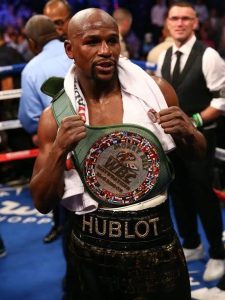
Floyd Mayweather Jr

Floyd Mayweather Jr. didn’t sell knockouts; he sold perfection. Across a 21-year career spanning five weight classes, Mayweather fought 24 current or former world champions and left the ring with a flawless 50–0 record.
Early in his career as “Pretty Boy” Floyd, he was a dynamic offensive fighter with blinding hand speed. But as brittle hands and age accumulated, he morphed into “Money” Mayweather: the ultimate defensive savant. Utilizing the classic Michigan shoulder roll (the Philly Shell), Mayweather deflected power shots with his lead shoulder, slipped punches by millimeters, and fired back sharp, demoralizing straight rights.
He neutralized knockout punchers and swarming volume-hitters alike—from Diego Corrales and Oscar De La Hoya to Canelo Álvarez and Manny Pacquiao. Love his pragmatic style or hate it, Mayweather solved every puzzle placed in front of him without ever taking sustained punishment.
5. Manny Pacquiao: The Eight-Division Whirlwind
-
Career Record: 62–8–2 (39 KOs)
-
Divisions: Flyweight to Super Welterweight
-
Signature Quality: Southpaw angles, boundless gas tank, volume in bunches
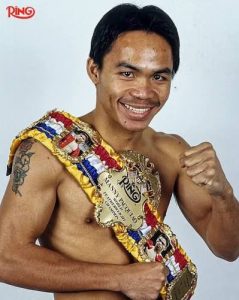
Manny Pacquiao
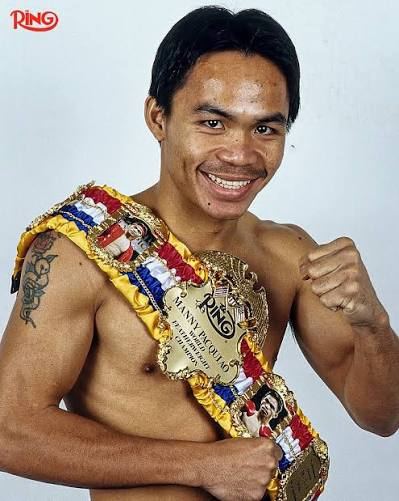
Manny Pacquiao’s career reads like sports fiction. Starting out as a malnourished teenager fighting in flyweight bouts for pocket change in the Philippines, “PacMan” climbed an absurd ten weight classes, capturing world titles in eight of them—a feat that will almost certainly never be matched.
Pacquiao’s signature was ferocious, relentless kinetic energy. As a southpaw, he cut lateral angles at high velocity, throwing blistering combinations from coordinates opponents couldn’t track. His star erupted in the US by dismantling featherweight royalty like Marco Antonio Barrera and Erik Morales, but his apex came as he moved into heavier classes, bludgeoning superstars like Ricky Hatton, Miguel Cotto, and Oscar De La Hoya.
Pacquiao didn’t simply collect sanctioning belts at catchweights; he dominated fighters who had significant size and reach advantages over him through sheer hand speed, high output, and warrior heart.
At a Glance: Tale of the Tape
| Boxer | Weight Class | Signature Achievement | Defining Trait |
| Muhammad Ali | Heavyweight | 3x Lineal World Champion | Footwork, ring IQ, iconic trilogies |
| Sugar Ray Robinson | Welter / Middle | 5x Middleweight Champion; 109 KOs | Fluidity, punch variety, pound-for-pound standard |
| Mike Tyson | Heavyweight | Youngest Heavyweight Champion (Age 20) | Intimidation, kinetic punching power, head movement |
| Floyd Mayweather Jr. | 5 Divisions | Undefeated 50–0 record | Defense, shoulder roll, counter-punching |
| Manny Pacquiao | 8 Divisions | World titles across 8 weight classes | Hand speed, high-volume southpaw combinations |
Honorable Mentions
Narrowing boxing’s history down to five means leaving out legends whose resumes could headline any era:
-
Joe Louis: Held the heavyweight crown for a record 12 years with 25 consecutive title defenses.
-
Roberto Durán: “Manos de Piedra” (Hands of Stone)—a ferocious lightweight master who fought effectively all the way up to middleweight.
-
Sugar Ray Leonard: Olympic champion who went to war with Hagler, Hearns, and Durán during the golden “Four Kings” era of the 1980s.
-
Rocky Marciano: The relentless pressure-fighter who retired as the only undefeated heavyweight champion at 49–0.
Frequently Asked Questions
Who is officially considered the greatest boxer of all time?
There is no single official consensus, but boxing historians, trainers, and peers routinely name Sugar Ray Robinson as the greatest pound-for-pound fighter and Muhammad Ali as the greatest heavyweight champion in history.
What does “pound-for-pound” actually mean?
Pound-for-pound (P4P) is a subjective assessment used by boxing writers to evaluate who the best fighter in the world would be if all weight disparities were removed. It measures skill, ring craft, versatility, and dominance independent of sheer body size.
Why is Floyd Mayweather’s 50–0 record considered so significant?
Modern boxing rarely sees elite fighters protect an unblemished record through five distinct weight divisions. Mayweather fought the top contenders and champions of his era across two decades without dropping a single official decision.
Greatness inside the squared circle isn’t just about preserving a clean record or landing one highlight-reel knockout. It’s about how a fighter handles the deep waters of championship rounds, how they adapt when their initial plan fails, and how deeply their fighting style embeds itself into the DNA of the sport. These five fighters answered those questions every time the bell rang.