Top 5 tennis players in india
Cricket might dominate every conversation in India, but if you look at the trophy cabinets in Indian sports, tennis tells an equally staggering story.
Long before modern infrastructure or corporate sponsorships arrived, Indian players were taking down top-ranked opponents on grass and clay. The country’s tennis history is unique: it started with classic touch artists in singles, evolved into a golden era of doubles dominance, and produced athletes who simply refused to age out of the game.
Picking an absolute “greatest” is tricky because each era brought something completely different to the table. But if you weigh Grand Slam silverware, global impact, Olympic pedigree, and sheer staying power, five names rise straight to the top.
1. Leander Paes

If you had to pick the ultimate face of Indian tennis, it’s Leander.
Paes was pure electricity on court. While the world remembers him primarily as a doubles maestro, his crowning individual achievement arrived at the 1996 Atlanta Olympics. Entering the men’s singles draw as a major underdog, he battled through the draw to secure a bronze medal—India’s first individual Olympic medal in over four decades, and still the nation’s only tennis medal.
From there, his doubles career became the stuff of legend:
-
18 Grand Slam titles: 8 in men’s doubles, 10 in mixed doubles.
-
Rare air: One of the few men in tennis history to achieve a career Grand Slam in both men’s doubles and mixed doubles.
-
Seven consecutive Olympics (1992–2016): An all-time record in men’s tennis.
-
Hall of Fame: Inducted into the International Tennis Hall of Fame in 2024 as the first Asian man in the player category.
Paes wasn’t just skilled; he was relentless. He won his final men’s doubles major at the 2013 US Open at age 40, diving across the baseline with the same teenage reflex that defined his early Davis Cup ties.
2. Sania Mirza
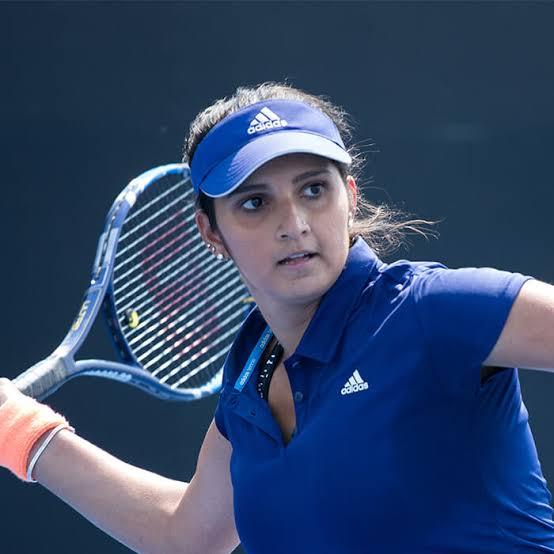
Before Sania Mirza arrived, women’s tennis in India rarely made mainstream headlines. She single-handedly changed that dynamic.
Equipped with a blistering, flat inside-out forehand, Mirza broke through in singles first. She claimed the 2005 Hyderabad Open to become the first Indian woman with a WTA singles title, eventually climbing to World No. 27.
When injuries forced her to pivot to doubles, she went from a top competitor to an unstoppable force:
-
6 Grand Slam titles split across women’s doubles and mixed doubles.
-
World No. 1 ranking in women’s doubles in 2015.
-
Formed the iconic “Santina” partnership with Martina Hingis, stringing together a 41-match winning streak and sweeping three straight Slams.
Her broader impact went well beyond numbers. She took the brunt of intense public scrutiny early in her career and answered it by winning on the world’s biggest stages. For young girls across the subcontinent, Sania proved that an Indian woman could be an elite, world-class athlete on her own terms.
3. Mahesh Bhupathi
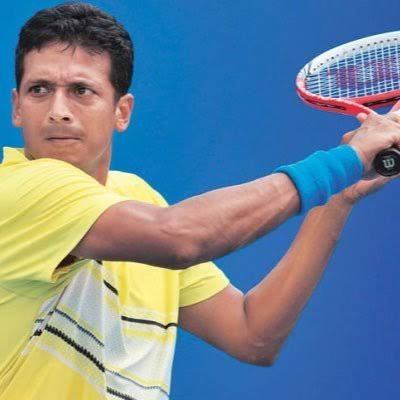
Mahesh Bhupathi’s legacy is etched in history for one foundational reason: he was the first Indian to win a Grand Slam title.
That breakthrough came at Roland Garros in 1997, winning the mixed doubles title alongside Japan’s Rika Hiraki. That victory broke a psychological barrier for Indian tennis, proving that winning majors was entirely attainable.
Bhupathi was the tactical anchor to Leander’s flash. Armed with a booming serve, lethal backhand returns, and exceptional court awareness, he built a resume that stands alongside the doubles elite:
-
12 Grand Slam titles (4 men’s doubles, 8 mixed doubles).
-
Completed the Career Grand Slam in mixed doubles.
-
Reached World No. 1 in doubles in 1999.
With Paes, he formed the “Indian Express.” In 1999, the duo pulled off the absurd feat of reaching all four Grand Slam finals in a single calendar year, winning Roland Garros and Wimbledon. Beyond his playing days, Bhupathi helped scout and support future talent, including funding early training stints for players like Sumit Nagal.
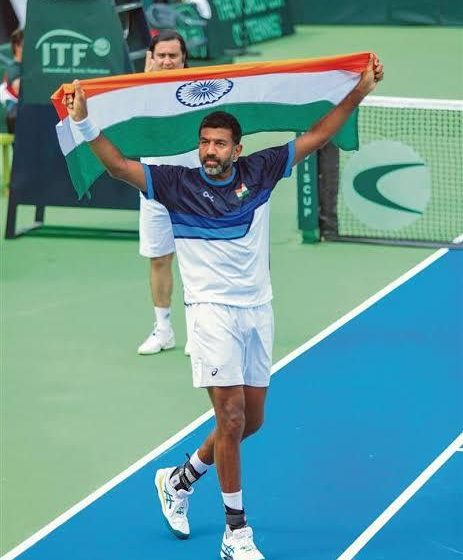
4. Rohan Bopanna

Rohan Bopanna’s story is about sheer resilience and playing the long game.
Hailing from the coffee plantations of Coorg, Bopanna was a late bloomer on the global circuit. He spent years grinding on the tour, reaching his first major men’s doubles final at the 2010 US Open with Pakistan’s Aisam-ul-Haq Qureshi (the “Indo-Pak Express”), and winning his first major in mixed doubles at the 2017 French Open.
Most players wind down their careers in their late 30s. Bopanna did the opposite:
-
At 43 years old, he won the 2024 Australian Open men’s doubles title with Matthew Ebden.
-
Became the oldest World No. 1 in tennis history shortly after.
-
Walked away with over 500 tour-level wins, proving that tactical clarity, smart recovery, and net discipline can outlast raw youth.
Bopanna kept India’s presence alive in Grand Slam second weeks when the golden generation stepped back, serving as an inspiration for longevity in modern sports.
5. Vijay Amritraj
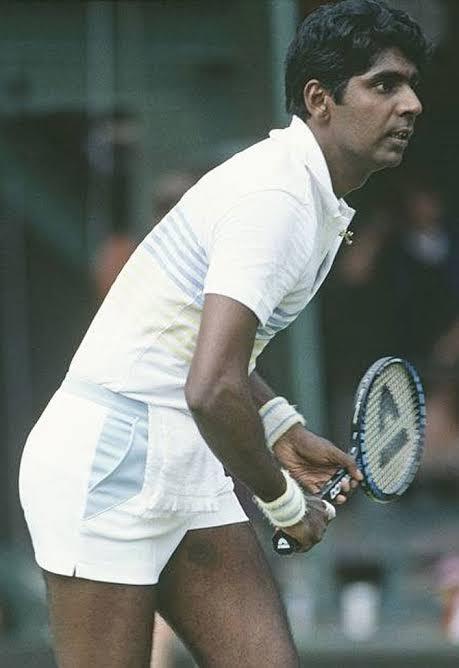
Before the doubles boom of the late 90s and 2000s, Vijay Amritraj was putting Indian tennis on global television screens through pure singles grit.
During the golden era of men’s singles in the 1970s and 80s—sharing courts with Björn Borg, Jimmy Connors, and John McEnroe—Amritraj was a regular threat on fast surfaces.
-
Reached a career-high singles ranking inside the World Top 20 (No. 16 in 1980).
-
Made four Grand Slam quarterfinals (two at Wimbledon, two at the US Open).
-
Led India to two historic Davis Cup finals in 1974 and 1987.
-
Inducted into the International Tennis Hall of Fame in 2024 alongside Paes.
The 1974 Davis Cup remains one of Indian sport’s most principled moments: India reached the final against South Africa but boycotted the tie in protest against the apartheid regime. Amritraj’s elegance on court and articulate presence off it laid the groundwork for every Indian player who followed.
The Big Picture
These five players capture distinct peaks of the sport:
-
Amritraj proved an Indian could trade blows with tennis royalty in singles.
-
Paes brought home Olympic glory and set an impossibly high bar for doubles speed and longevity.
-
Bhupathi broke the Grand Slam ceiling and mastered doubles strategy.
-
Mirza completely rewrote the blueprint for Indian women in global sport.
-
Bopanna defied the biological clock to reach the summit of the rankings in his forties.
Together, they took Indian tennis out of niche domestic sports pages and made it a regular fixture on Centre Courts around the world.