Top 5 women cricket players in india
Not too long ago, women’s cricket in India fought an uphill battle just to be broadcast on television. Today, matches pack stadiums, prime-time television slots are non-negotiable, and young girls across the country grow up wanting to open the batting or fire in yorkers rather than just watching from the sidelines.
The explosive arrival of the Women’s Premier League (WPL) and the national team’s historic 2025 World Cup triumph in Navi Mumbai finally kicked the door wide open. But that overnight success took decades of quiet grind from players who carried the sport when there were no sponsors, private jets, or packed press rooms.
Pinning down the five greatest Indian women cricketers means bridging the gritty past with a dominant present. These five figures didn’t just rack up extraordinary records—they fundamentally reshaped Indian cricket.
1. Smriti Mandhana – The Pure Match-Winner
Watching Smriti Mandhana in full flow is easily one of the most satisfying sights in modern cricket. The effortless bat swing, the balance on the back foot, and that trademark, crisp cover drive through extra cover make her a nightmare for opening bowlers around the world.
Mandhana isn’t just style, though. Over a decade into her international career, she has evolved into the team’s most reliable run-machine. In 2026, she officially overtook Mithali Raj to become the all-time leading run-scorer in women’s international cricket across formats, while also claiming the record for the most international hundreds.
During the title-winning 2025 World Cup run, Mandhana was ruthless, piling on a tournament-best 434 runs and setting the tone at the top alongside Shafali Verma. Between anchoring India’s top order, headlining the WPL, and starring in overseas leagues, she represents the gold standard of what an elite modern batter looks like.
2. Mithali Raj – The Bedrock of the Indian Game
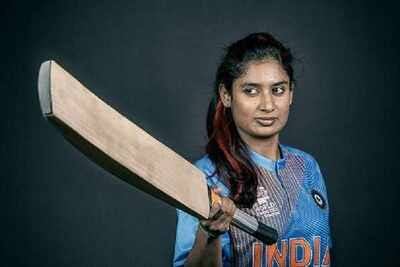
Before there were commercial endorsements and franchise bidding wars, there was Mithali Raj holding the entire batting lineup together. Making her debut at just 16 back in 1999—scoring a debut century, no less—she went on to anchor the national side for over twenty-three years.
Mithali was the master of patience and game management. Finishing her career with over 7,800 ODI runs at an average north of 50, she was the first woman to break the 7,000-run barrier in the format. Her historic double-century (214) against England in Taunton remains legendary, but her real legacy was leadership.
She captained India to two World Cup finals (2005 and 2017). The heartbreak of that 2017 final at Lord’s was the exact catalyst that forced mainstream India to stop and take women’s cricket seriously. Without Mithali’s iron discipline at the crease, the platform today’s stars enjoy wouldn’t exist.
3. Harmanpreet Kaur – The Big-Stage Maverick

If Mithali was the stabilizer, Harmanpreet Kaur has always been the firebrand. Known for her aggressive stroke play and fearless intent, Harman is the player you want walking out when the required run rate looks impossible.
Nobody who saw it will ever forget her unbeaten 171 against Australia in the 2017 World Cup semi-final. It wasn’t just a great innings; it was a violent destruction of the world’s most dominant team that signaled a major psychological shift: India was no longer content just competing—they were here to dominate.
Harman became the first Indian woman to hit a T20I century, the first to land an overseas franchise contract (Sydney Thunder), and the captain who finally lifted the elusive ODI World Cup trophy in 2025. Her longevity is absurd—crossing 350 international caps to become the most-capped player in women’s history—and her relentless aggression changed how Indian teams approach white-ball chases.
4. Jhulan Goswami – The Pioneer of Pace
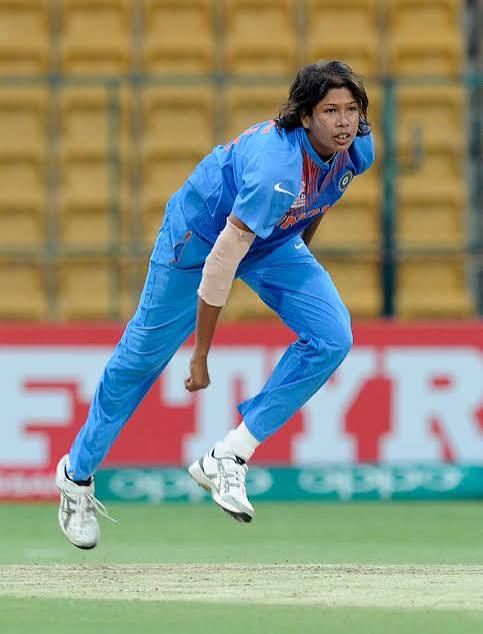
Fast bowling in India has always been a brutal trade, but doing it for two decades without the support systems of the modern era borders on superhuman. Standing at 5’11”, the “Chakdaha Express” gave India a genuine, world-class pace spearhead from 2002 until her retirement in 2022.
Jhulan finished her career as the leading wicket-taker in Women’s ODI history with 255 scalps (and well over 350 international wickets combined). She could generate awkward bounce, hit the seam relentlessly, and keep batters quiet in the powerplay across five different World Cups.
More importantly, Jhulan broke the myth that Indian women couldn’t produce genuine fast bowlers. She paved the way for the current crop of pacers like Renuka Singh Thakur, proving that stamina, aggression, and relentless line-and-length could thrive at the highest level.
5. Deepti Sharma – The Ultimate Swiss Army Knife
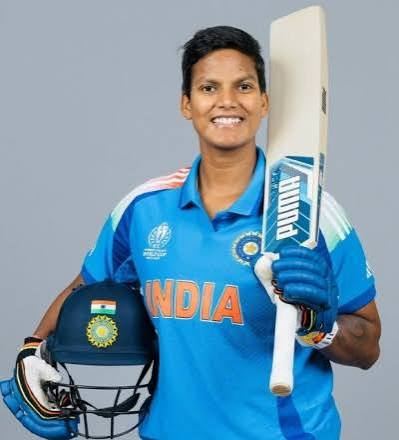
Every great side has that one player a captain turns to when everything is falling apart. For India, that’s Deepti Sharma.
Batting in the middle order, bowling tight off-spin inside the powerplay or at the death, and executing direct hits from the deep—Deepti does the dirty work without demanding the spotlight. She announced her batting chops early with a massive 188 against Ireland, but it’s her match-controlling all-round reliability that makes her irreplaceable.
Her crowning moment came during the 2025 World Cup campaign. She was named Player of the Tournament after pulling off an unprecedented double: over 200 runs and 22 wickets in a single edition, capped by a blistering 5/39 in the final against South Africa. She is tactical flexibility personified, and without her balance, the Indian lineup simply doesn’t tick.
The New Era
While these five carried the mantle, the bench strength waiting behind them is terrifyingly good. Shafali Verma bludgeons attacks inside the powerplay, Jemimah Rodrigues anchors high-pressure chases with pure finesse, and Richa Ghosh clears ropes with raw power.
The WPL proved that talent was never the issue in India—access was. Now that elite coaching, fitness infrastructure, and financial stability are locked in, these players aren’t just celebrated as “women cricketers.” They’re celebrated simply as world-class athletes, inspiring millions every time they walk through the boundary ropes.