Best 5 cricket ball brands in india
If you’ve spent any time bowling in the nets or opening an innings, you already know this: a terrible cricket ball ruins the entire session. A ball that loses its shape after three overs, goes soft, or has a seam flatter than a pancake makes it impossible for bowlers to get movement or for batters to judge bounce.
Finding the right ball in India usually comes down to five names, each serving a slightly different corner of the game.
The Big Five: How They Actually Compare
| Brand | Sweet Spot | Typical Price Range | Best Match For |
| SG | Competitive league matches & club tournaments | ₹400 – ₹2,500+ | All-round club and tournament cricket |
| Kookaburra | High-grade matches & serious net prep | ₹700 – ₹3,000+ | Fast, true bounce on hard tracks |
| DSC | Club weekenders & intense net sessions | ₹400 – ₹1,500 | Durable leather on a practical budget |
| SS | Academy drills & local tournament play | ₹400 – ₹1,300 | Workhorse leather balls for regular training |
| COSCO | Tennis tournaments, gully games & net drills | ₹100 – ₹850 | Recreational matches, beginners, and tennis cricket |
1. SG (Sanspareils Greenlands)
The Default Choice for Indian Conditions

There’s a reason SG dominates local circuits: their balls are built specifically for abrasive Indian pitches.
-
The Seam: SG balls—especially classic 4-piece models like the SG Club or Tournament—feature a pronounced, hand-stitched seam. Even after 20 to 30 overs on dry, abrasive surfaces, that seam stays raised enough to grip the turf and offer seam movement.
-
The Feel: They use traditional alum-tanned leather packed around a tight cork core. They feel firm in the hand and maintain their shape exceptionally well through heavy hitting.
-
Where it shines: Red-ball league games, college tournaments, and competitive weekend matches.
2. Kookaburra
The Gold Standard for Pace and True Bounce
Kookaburra is what you see in most white-ball international games and the IPL. If you’re stepping onto a true, hard pitch and want consistent pace off the deck, this is your brand.
-
Behavior: Unlike SG, Kookaburra balls have a slightly flatter, machine-stitched seam. The ball swings early through the air when the shine is fresh, but once the lacquer wears off, it rewards pure pace and seam discipline.
-
The Catch: Premium models (like the Kookaburra Turf) get expensive quickly. Unless you’re playing at a competitive semi-pro level or running high-tier selection trials, burning through a top-tier Kookaburra in the nets can get costly.
-
Where it shines: Serious match prep, higher-division leagues, and turf-wicket games.
3. DSC (Delux Sports Company)
The Unsung Workhorse for Club Cricketers
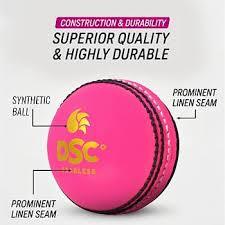
DSC doesn’t get quite the same hype as SG, but their ball division punches well above its weight—especially in the ₹500 to ₹1,200 tier.
-
Build: Balls like the DSC ‘Pace’ and ‘Red Dot’ feature Portuguese cork cores and treated leather that holds up surprisingly well against damp outfields.
-
Value: If your club goes through two or three balls every weekend practice session, DSC gives you an authentic match-grade bounce and seam without blowing your kit budget.
-
Where it shines: Club practice, division-level games, and academy bowlers who need durability.
4. SS (Sareen Sports)
The Academy Favorite

SS is legendary for their bats, but their ball lineup (Yorker, TON Elite, County) has quietly become the backbone of cricket academies across India.
-
Consistency: SS balls break in gradually. They don’t turn into rocks that sting your palms, nor do they turn mushy halfway through an afternoon session.
-
Where it shines: Net practice, practice games, and junior-to-intermediate league tournaments.
5. COSCO
Recreational, Gully, and Tennis-Ball King
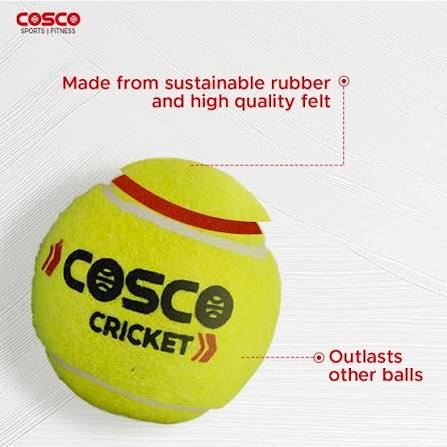
If you grew up playing cricket in India, you’ve held a COSCO ball. While they do produce entry-level leather balls (like their Club and Test series), their real claim to fame is tennis cricket.
-
Heavy Tennis vs. Light Tennis: COSCO’s heavy-weight tennis balls give you enough mass to simulate genuine fast bowling without requiring a full set of pads and a helmet on rough terrain.
-
Where it shines: Gully matches, concrete wickets, casual box leagues, and basic fielding drills.
What to Check Before You Tap “Buy”
-
Two-Piece vs. Four-Piece:
-
2-Piece: Usually cheaper; fine for casual weekend knocks or basic fielding drills, but prone to going egg-shaped after several hard hits.
-
4-Piece: Mandatory for serious cricket. The quarter-seam construction keeps the sphere symmetrical, produces consistent bounce, and handles hard shots off the bat edge without deforming.
-
-
Standard Weight Rules: A senior men’s leather match ball must weigh between 156g and 163g (approx. 5.5 oz). If a ball feels noticeably light out of the box, it won’t carry through to the keeper properly and will fly erratically off the pitch.
-
Red, White, or Pink?
-
Red: The standard for red-ball multi-day and daytime club matches. Gets darker with age.
-
White: Essential for day-night matches under lights and limited-overs white-ball cricket. Requires clean outfields, as white leather picks up dirt fast.
-
Pink: Specifically designed for day-night long-format matches to stay visible under floodlights without scuffing black as quickly as white balls.
-
A Quick Word on Practice vs. Match Day
Don’t waste premium balls on rough net surfaces. Concrete slabs and uneven matting will shred an expensive match-grade leather ball in thirty minutes.
Keep a sleeve of solid club-grade balls—like an SG Club or DSC Pace—for your net rotation, and reserve the higher-grade balls exclusively for match-day turf wickets. For concrete and tarmac sessions, stick to a heavy-duty COSCO tennis ball every single time.